
Right to Work Checks & Share Codes: An Employer’s 2026 Guide
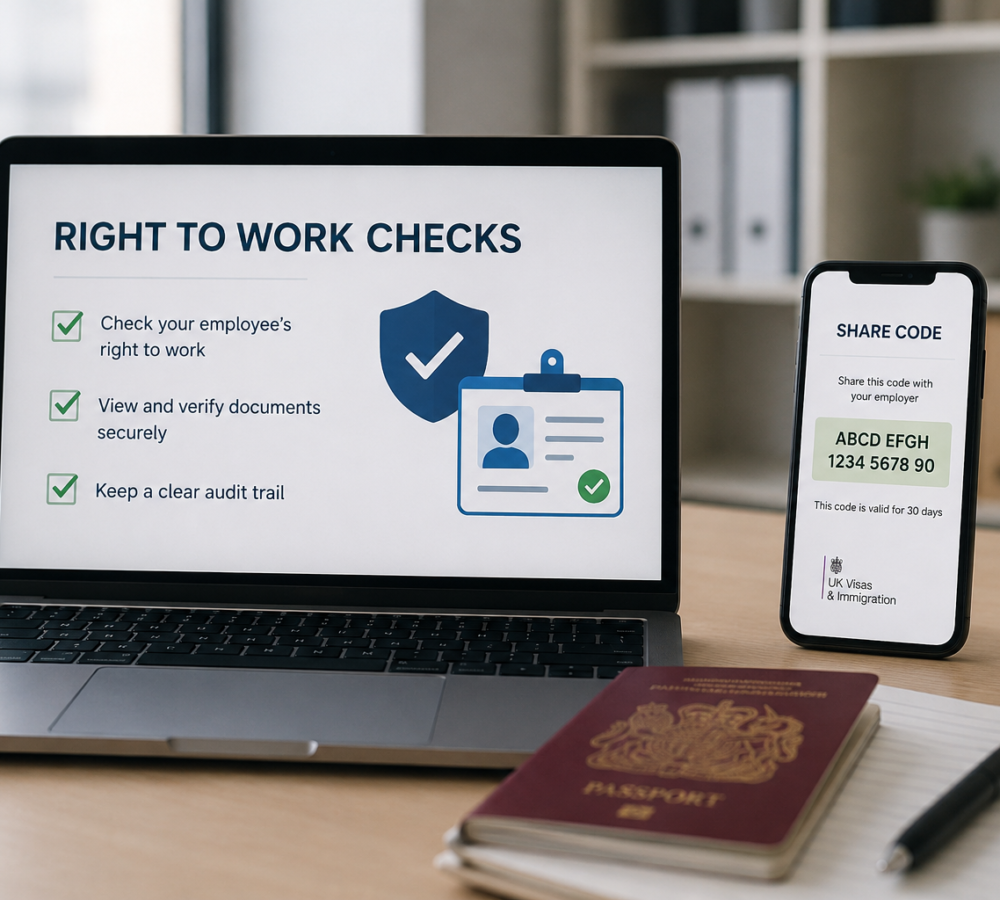
Hiring the right talent is essential, but hiring someone who isn’t legally allowed to work in the UK can expose your business to serious financial and legal risks. That’s why right to work checks are not just a formality; they’re a critical legal responsibility for every UK employer.
With the UK’s immigration system rapidly shifting toward digital processes, traditional document checks are increasingly being replaced by online verification using share codes and eVisas. While this makes the process faster and more secure, it also means employers must stay up to date with the latest rules to avoid costly mistakes.
Failure to carry out proper checks can lead to penalties of up to £20,000 per illegal worker, reputational damage, and even the loss of your sponsor licence. On the other hand, when done correctly, these checks provide a statutory excuse, protecting your business from liability.
Recent immigration updates have further changed how employers verify work eligibility. If you want a broader understanding of these evolving rules, this guide on UK Visa Changes provides useful context.
This guide explains everything employers need to know about right to work checks, including share codes, compliance requirements, and best practices for 2026.
Quick Answer
A right to work check is a legal requirement for UK employers to confirm that an individual is allowed to work before employment begins. This is usually done using a share code, official documents, or the Home Office online checking system. Employers must complete the check correctly and keep records to avoid penalties and gain a statutory excuse.
What Is a Right to Work Check and Why Employers Must Get It Right
A right to work check is the process employers must follow to confirm that a job applicant is legally permitted to work in the UK. This check must be completed before employment begins, regardless of whether the individual is a UK national or a foreign worker.
Why it matters
Failing to carry out proper checks can lead to serious consequences, including:
- Civil penalties of up to £20,000 per illegal worker
- Criminal liability in severe cases
- Reputational damage to the business
- Loss of a sponsor licence
For businesses that hire international employees, compliance is even more critical. Employers sponsoring foreign workers must meet strict legal obligations throughout the employment period. If you are hiring under sponsorship routes, understanding your employer sponsorship requirements is essential to ensure full compliance and avoid potential penalties.
What is a statutory excuse?
A statutory excuse is a legal defence that protects employers from penalties if they have carried out the correct right to work checks. To establish this protection, employers must:
- Conduct checks before employment begins
- Use approved verification methods
- Keep accurate and secure records
Key takeaway:
Completing a compliant right to work check gives employers legal protection against penalties.
Understanding the Right to Work Share Code System
The share code system is now central to how employers verify work eligibility in the UK.
What is a share code?
A share code is a unique 9-character code issued by the Home Office. It allows employers to access an individual’s immigration status online through the official checking system.
Instead of relying on physical documents, employers can use this code along with the applicant’s date of birth to view their right to work status in real time.
Key features of a share code
- Typically begins with the letter “W”
- Valid for 90 days
- Provides real-time immigration status
- Linked to the applicant’s digital immigration record
Who needs a share code?
Share codes are commonly used by individuals who hold digital immigration status, including:
- Skilled Worker visa holders
- International students
- Individuals with eVisas
For example, applicants under the Skilled Worker route must prove their eligibility digitally when starting a new job. Employers hiring in this category should also understand the occupations eligible for a UK skilled worker visa to ensure the role meets the required criteria.
Similarly, international students may provide share codes when applying for part-time work. However, their working hours are restricted depending on their visa conditions. Employers should be aware of these limitations before hiring. To better understand these rules, refer to this guide on UK student visa requirement.
Key takeaway:
Share codes are the primary method for verifying work rights for non-UK nationals with digital immigration status.
How to Conduct an Online Right to Work Check (Step-by-Step)
Employers must follow a specific process when conducting an online right to work check. This ensures compliance and helps establish a statutory excuse.
Step 1: Request the share code
Ask the applicant to provide their share code along with their date of birth.
Step 2: Access the official checking service
Use the Home Office online right to work checking system.
Step 3: Review the applicant’s status
Check whether the individual has permission to work and note any restrictions.
Step 4: Verify identity
Ensure the photograph shown in the system matches the person presenting themselves for work.
Step 5: Retain evidence
Save a copy of the check, including the date it was conducted.
Important rules employers must follow
- Checks must be completed before employment begins
- Employers cannot accept screenshots or printed copies
- Records must be stored securely for future reference
Quick summary:
Employers must use the official Home Office system and keep records to remain compliant. As digital systems become more common, understanding the concept of a UK Electronic Visa (eVisa) is also important. These systems are replacing traditional visa documentation and shaping how right to work checks are conducted.
Right to Work Check for Employers: Alternative Methods
Although online checks using share codes are now the most common method, there are situations where alternative verification processes must be used.
Manual document checks
Manual checks are still valid for certain individuals, particularly:
- British citizens
- Irish citizens
Employers must review original documents such as passports and ensure they are genuine and belong to the applicant.
Employer Checking Service (ECS)
The Employer Checking Service is used when an applicant cannot provide proof of their right to work immediately.
This may apply if:
- The individual has a pending visa application
- An appeal or administrative review is ongoing
- Documents are with the Home Office
In such cases, the employer receives a Positive Verification Notice, which provides temporary permission to employ the individual.
Identity Service Providers (IDSPs)
Identity Service Providers are third-party organisations that verify identity documents digitally. These are mainly used for British and Irish citizens with valid passports. For businesses hiring overseas workers, these checks often form part of a wider compliance process that includes obtaining and maintaining a sponsor licence. If you are new to sponsorship, this guide on How to Apply for a Sponsor Licence can help you understand the application process.
Common Mistakes Employers Must Avoid
Even experienced employers can make errors when conducting right to work checks. These mistakes can lead to compliance breaches and financial penalties.
1. Accepting screenshots instead of official verification
One of the most common mistakes is relying on screenshots or printed documents provided by candidates. These are not valid proof of right to work. Employers must always use the official Home Office system when a share code is provided.
2. Using expired share codes
Share codes are only valid for 90 days. If an employer uses an expired code, the check is considered invalid, and they lose their statutory excuse.
3. Failing to verify identity properly
It’s not enough to check immigration status online. Employers must ensure that the individual presenting themselves matches the photo and details in the system.
4. Not keeping proper records
Employers must retain evidence of the check, including the date it was conducted. Failure to maintain records can result in penalties, even if the employee had valid work rights.
5. Misunderstanding sponsorship obligations
Businesses employing overseas workers must comply with ongoing sponsorship duties. This includes monitoring employee status and reporting changes. Mismanagement can lead to licence suspension. To better understand the financial and compliance responsibilities tied to sponsorship, including employer charges, using an immigration skills charge calculator can be helpful.
Key takeaway:
Simple errors in right to work checks can result in serious legal and financial consequences.
2026 Updates: The Shift to Digital Right to Work Checks
The UK immigration system is undergoing a major transformation, moving toward a fully digital framework. This shift is changing how employers verify work eligibility.
Key developments in 2026
- Rise of eVisas
Physical visa documents are gradually being replaced by digital records. This means more applicants will rely on share codes instead of traditional paperwork. - Increased use of online verification
Employers are expected to use digital systems for most checks, reducing reliance on manual document reviews. - Remote hiring and onboarding
With more businesses operating remotely, digital right to work checks make it easier to verify employees without in-person meetings.
Why this matters for employers
- Faster verification processes
- Reduced risk of document fraud
- Greater reliance on accurate digital records
However, it also means employers must stay updated with evolving rules. Immigration pathways are becoming more interconnected, especially for individuals transitioning between visa types.
For example, many international graduates now move into employment through the Skilled Worker route. employers hiring recent graduates should understand this transition process:
Key takeaway:
Digital transformation is making right to work checks faster but also more dependent on correct processes.
How GMS Immigration Can Help Employers Stay Compliant
For many businesses, navigating right to work checks and immigration compliance can be complex and time-consuming. Rules change frequently, and even small mistakes can have serious consequences.
Challenges employers face
- Keeping up with changing immigration rules
- Managing sponsorship responsibilities
- Understanding visa conditions and restrictions
- Avoiding penalties and legal risks
How expert support helps
Working with immigration specialists can help employers:
- Conduct compliant right to work checks
- Understand sponsorship and visa requirements
- Stay updated with policy changes
- Reduce the risk of fines and legal issues
Whether you are hiring your first overseas worker or managing a large workforce, professional guidance ensures that your processes remain accurate and compliant.
Key Takeaways
- Employers must complete a right to work check before employment starts
- Share codes are now the primary method for verifying work rights digitally
- A share code is valid for 90 days and must be used via the official system
- Employers cannot accept screenshots or unofficial documents
- Proper checks provide a statutory excuse against penalties
- Digital systems like eVisas are replacing physical documents
- Mistakes in checks can lead to fines, legal risks, and licence issues
- Employers hiring overseas workers must also understand sponsorship responsibilities
Conclusion
Right to work checks are a fundamental legal responsibility for UK employers. With the growing use of share codes and digital verification systems, it is more important than ever to follow the correct procedures.
Employers must ensure that:
- Checks are completed before employment begins
- The correct verification method is used
- Records are properly maintained
- Immigration rules are consistently followed
As the UK continues to modernise its immigration system, businesses that stay informed and proactive will be better positioned to hire confidently and remain compliant.
FAQs: Right to Work Checks & Share Codes
How long is a right to work share code valid?
A share code is valid for 90 days from the date it is generated. Employers must ensure the code is still active at the time of the check.
Can employers accept screenshots of a share code?
No, screenshots are not acceptable. Employers must use the official Home Office online checking system.
Who needs a right to work share code?
Non-UK and non-Irish nationals with digital immigration status, such as Skilled Worker visa holders and international students, typically need a share code.
What happens if an employee cannot provide a share code?
Employers may need to use alternative methods, such as manual checks or the Employer Checking Service, depending on the individual’s situation.