
UK Ancestry Visa: Commonwealth Grandparent Route to ILR
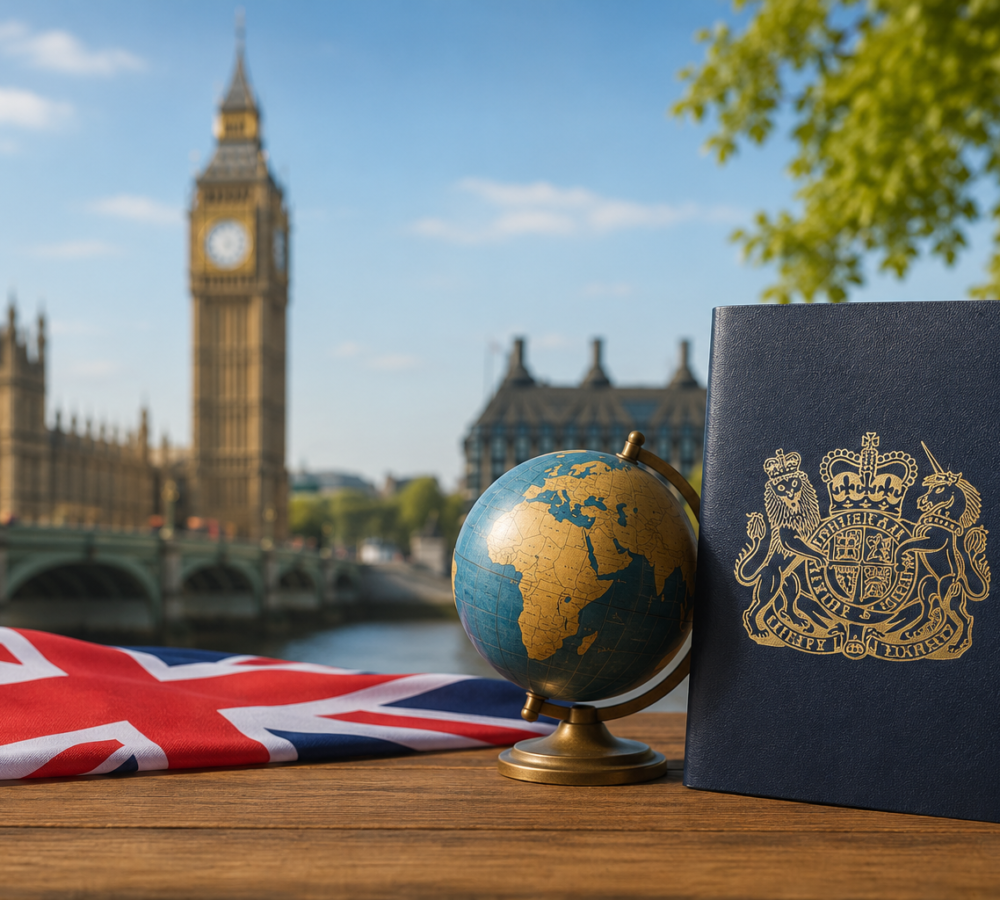
Picture this: you’ve grown up in Australia, Canada, New Zealand or South Africa hearing family stories about a grandfather from Yorkshire or a grandmother from Belfast. That family story might be worth more than you think. If you can prove it, the UK ancestry visa could be your quiet, sponsor-free route into Britain: no job offer needed, no employer paperwork, just a family tree and the right documents. It’s one of the few visa categories still built entirely around who you’re related to, not what you do for a living. For many Commonwealth citizens, it’s also the most overlooked path to long-term settlement in the UK. This guide walks through eligibility, real fees, and exactly how the visa leads to indefinite leave to remain (ILR), so you know where you stand before you apply.
This guide reflects Home Office fees and rules published on GOV.UK at the time of writing. Immigration fees are reviewed periodically, so always check the current figures before you budget or apply.
Quick Overview: UK Ancestry Visa at a Glance
| Question | Short Answer |
| Who can apply? | Commonwealth citizens aged 17+ with a UK-born grandparent |
| Initial visa length | 5 years |
| Application fee | £726 per person |
| Healthcare surcharge | £1,035 per year, per person |
| Can you work? | Yes, any role, full-time or part-time |
| Route to settlement | Apply for ILR after 5 continuous years |
| ILR fee | £3,226 per person |
| Route to citizenship | Usually possible around 12 months after ILR |
What Is the UK Ancestry Visa?
The UK ancestry visa lets Commonwealth citizens live and work in Britain because of UK ancestry through a grandparent, not because an employer has sponsored them. That single difference sets it apart from almost every other route into the country.
Compare it with the alternatives. Partners typically apply through Appendix FM. Refugees reuniting with family go through Appendix Family Reunion. Skilled professionals need a job offer under Appendix Skilled Worker. Those routes all depend on someone else: a partner, a sponsor, an employer. The ancestry visa doesn’t. If your grandparent was born in the right place, the door is already open.
According to GOV.UK, the visa is granted for 5 years initially, allows full-time or part-time work in any role, paid or voluntary; and unlike a visa under Appendix Student, it leads directly towards settlement rather than requiring a switch into another category first. If ancestry isn’t an option for you, it’s worth reading about other work routes instead, particularly if you already have a job offer lined up.
UK Ancestry Visa Requirements: Do You Qualify Through a Grandparent?
This is where most applicants either get excited or get confused. The rules are narrower than they first appear, so it’s worth reading them properly rather than assuming.
According to GOV.UK’s eligibility criteria, you must show that:
- You’re a Commonwealth citizen, British overseas citizen, British overseas territories citizen, British national (overseas), or a citizen of Zimbabwe
- You’re aged 17 or over
- One of your grandparents was born in the UK, the Channel Islands, or the Isle of Man
- Or your grandparent was born in what is now Ireland, before 31 March 1922
- Or your grandparent was born aboard a UK-registered ship or aircraft
- You have enough money to support yourself without relying on public funds
- You genuinely intend to work in the UK
Adopted applicants and adopted parents can still claim through the family line. Children born outside marriage are also covered. The one firm exception: you cannot claim UK ancestry through a step-parent, no matter how close that relationship is.
Can a Great-Grandparent Help You Qualify for UK Ancestry?
This question comes up constantly, so let’s be direct about it. A great-grandparent’s birthplace does not, by itself, qualify you. GOV.UK is specific that the qualifying relative is a grandparent; the rule does not extend a generation further back.
That said, a great-grandparent can still matter indirectly. If your great-grandparent’s circumstances explain why your grandparent happened to be born on a UK-registered ship or in a place that qualifies, the connection becomes relevant again. It’s a technical point, and family histories rarely arrive in neat, obvious lines. If your ancestry chain looks unusual or hard to prove, get it reviewed properly before you assume either way.
Proving Your Ancestry: Documents You’ll Need
Expect to gather:
- Your birth certificate, showing your parents’ details
- Your parents’ birth certificates, showing your grandparents’ details
- Your grandparent’s birth certificate or equivalent evidence of birthplace
- Marriage certificates, if names have changed along the way
- Your passport, confirming your qualifying nationality
Missing or mismatched paperwork is one of the most common reasons ancestry applications stall.
UK Ancestry Visa Cost: What You’ll Actually Pay
The UK ancestry visa cost isn’t a single number; it’s a small handful of fees that add up. Here’s the breakdown, based on current GOV.UK figures for a single adult applicant on the standard 5-year visa:
| Cost Item | Amount | Notes |
| Application fee | £726 | Paid once, per applicant, non-refundable |
| Healthcare surcharge (IHS) | £1,035 per year → £5,175 for 5 years | Paid upfront, in full, for the whole visa length |
| Subtotal to enter the UK | £5,901 | Per adult applicant |
| Dependant application fee | £726 per dependant | Same fee structure applies to partners and children |
| Priority service (optional) | Additional fee | Faster decision, subject to availability |
A family of two adults, for example, would be looking at roughly £11,802 in application and healthcare fees combined before any optional extras. These figures come directly from GOV.UK. Ancestry visa page and the healthcare surcharge guidance are both worth bookmarking, since fees are reviewed by the Home Office from time to time.
Costs People Often Forget
Beyond the visa and healthcare fees, budget for:
- Certified translations of foreign-language birth or marriage certificates
- The Life in the UK Test fee, needed later at settlement stage
- An English language test fee, if required
- Advice fees, if you use a representative regulated by the Immigration Advice Authority, it’s worth checking their regulatory register before instructing anyone
None of these are optional extras you can skip. Plan for them from day one.
From UK Ancestry Visa to ILR: The Route to Settlement
Here’s the part most people are really asking about. After five continuous years in the UK on this visa, you become eligible to apply for indefinite leave to remain, permanent settlement, with no expiry date on your right to stay. It’s the broader route to ILR that applies across several visa categories, though ancestry applicants reach it in their own way.
Continuous Residence: Mind the Gaps
“Continuous” is doing a lot of work in that sentence. Per GOV.UK, in most cases you should not spend more than 180 days outside the UK in any 12 months across those five years. Some absences can be excused for good reason, but that’s assessed case by case, not assumed. If your work or family life has pulled you abroad for extended stretches, don’t guess; get advice before you apply. It’s worth comparing how residence rules differ across routes, which this comparison of ILR pathways and timelines covers in more depth.
Life in the UK Test and English Language Requirement
If you’re between 18 and 64, GOV.UK confirms you’ll need to pass the Life in the UK Test and meet the English language requirement before ILR is granted. Neither is optional, and neither can be left until the last minute; book early, especially if test slots are limited in your area.
ILR UK Ancestry Fees and Processing
The ILR UK ancestry application costs £3,226 per person, a separate fee from the visa and healthcare surcharge you already paid. Standard processing takes up to 6 months, though a super priority service is available for an additional £1,000 to speed things up. One firm rule: don’t travel outside the UK, Ireland, the Channel Islands or the Isle of Man while your decision is pending, or your application could be withdrawn.
Adding it up for a single applicant: £726 (visa) + £5,175 (healthcare surcharge) + £3,226 (ILR) comes to roughly £9,127 across the full five-year journey to settlement, before any optional priority services or dependant costs.
Beyond Settlement: British Citizenship and Family Considerations
Once ILR is granted, most people become eligible to apply for British citizenship roughly twelve months later, provided other requirements are met. It’s worth reading up on what’s actually needed for that step; this guide to documents required for a British citizenship application is a useful starting point.
A few other things worth knowing:
- Partners and children can usually apply as dependants on the same or a linked application, subject to their own relationship and residence conditions
- ILR can be lost if you spend more than two years outside the UK at any one stretch, so settlement isn’t entirely permanent if circumstances change
- Every family situation is different; gaps in residence, unclear ancestry documents, or dependants with their own visa history all change the picture
If you’d like to understand what ILR actually unlocks day to day, this breakdown of ILR’s key benefits lays it out clearly.
Is the UK Ancestry Visa Route Right for You?
If you’re a Commonwealth citizen with a UK-born grandparent and no interest in chasing employer sponsorship, this route is often the simplest way into the UK and one of the more generous ones still available. It skips the job-offer requirement entirely, gives you full freedom to work, and leads to settlement on a fixed, predictable timeline for a known and published set of fees.
It’s not the right fit for everyone, though. If your ancestry chain is unclear, or you don’t have a qualifying grandparent, it may be worth looking at other work routes instead.
Given how document-heavy and lineage-specific this process is, getting it reviewed early saves time and money later. If you’re ready to find out where you stand, check your ancestry eligibility with our team before you start gathering paperwork.
Frequently Asked Questions about UK Ancestry Visa
Does a great-grandparent qualify me for UK ancestry?
Not directly. The rule is built around the grandparent generation. A great-grandparent only becomes relevant if they explain why your grandparent was born somewhere that qualifies.
How much does the UK ancestry visa cost in total, including ILR?
For a single applicant, expect roughly £5,901 to enter (application fee plus 5 years of healthcare surcharge) and then £3,226 for ILR, around £9,127 in total, excluding any optional priority services. Always confirm current figures on GOV.UK before budgeting, as fees are reviewed periodically.
Can my partner apply for ILR UK ancestry alongside me?
Usually yes, as a dependant, provided your relationship and their residence history meet the requirements. They’ll pay their own linked application fees.
How long does it take to go from the UK ancestry visa to ILR?
Five continuous years of residence, followed by standard ILR processing of up to 6 months once you apply, faster if you use the paid super priority service.