
UK Visitor Visa Requirements: The Complete 2026 Eligibility Checklist
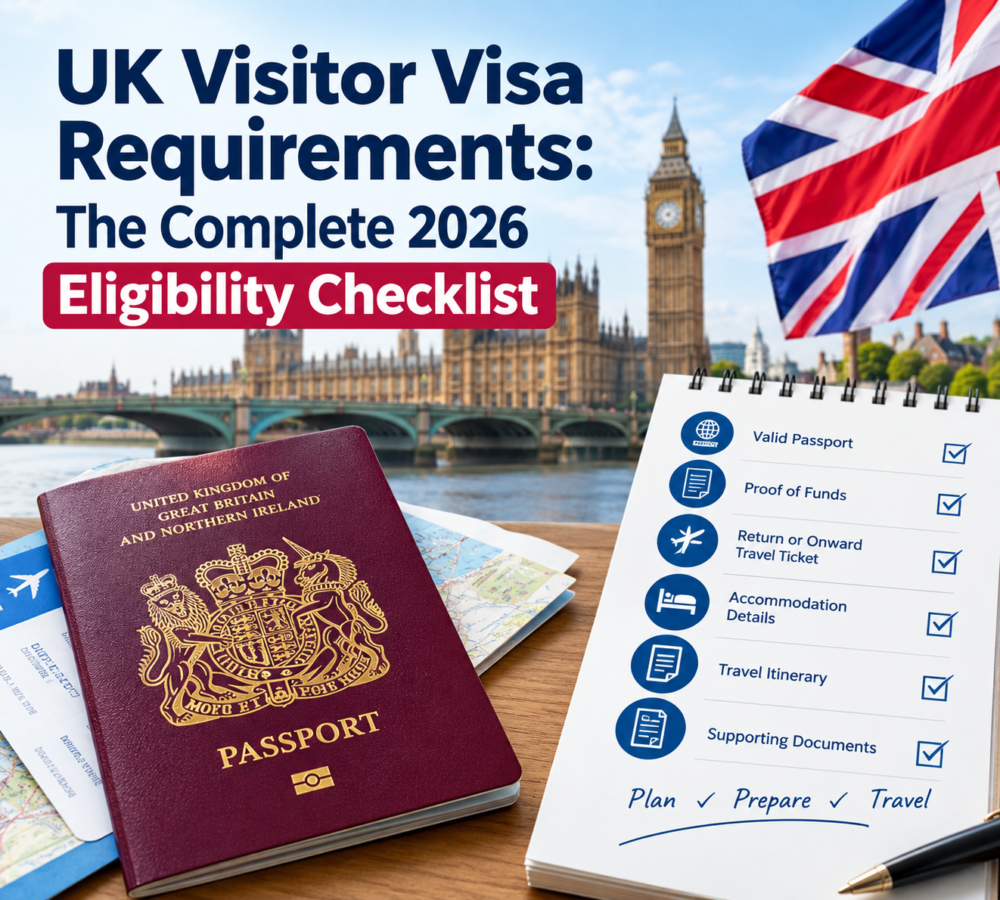
Before you spend anything on a UK visit, it’s worth knowing exactly what the Home Office needs to see. The UK visitor visa requirements are set out in Appendix V of the Immigration Rules, and while the wording is legal in style, the substance comes down to a handful of clear tests: who you are, what you’re coming to do, whether you can afford it, and whether you’ll actually leave when you say you will.
This checklist breaks each requirement down individually, so you can go through your own circumstances point by point before you apply — rather than discovering a gap after you’ve already paid the fee.
The Legal Basis: Appendix V (Visitor)
Every Standard Visitor visa decision is made against Appendix V of the Immigration Rules, the section of UK law that sets out who qualifies as a genuine visitor, what activities are permitted, and what evidence is expected. It applies equally whether you’re applying to visit family, attend a business meeting, or take a short holiday. Officers assess your case on the balance of probabilities — meaning it’s on you, the applicant, to show that you more likely than not meet each requirement, since there’s no opportunity for the officer to ask follow-up questions once your application is submitted.
The Core UK Visitor Visa Requirements
Strip away the legal language, and every Standard Visitor visa application is judged against six requirements.
1. Genuine Intention to Visit
You must be coming to the UK for a purpose that’s actually permitted under the visitor rules — tourism, visiting friends or family, business activities, or certain short courses of study. The purpose you state must be specific and consistent with the evidence you provide. A vague or generic explanation (“holiday and meetings”) is one of the more common weak points in an otherwise solid application.
2. Intention to Leave at the End of the Visit
This is, in practical terms, the most heavily weighted requirement. The officer must be satisfied you intend to leave the UK at the end of your permitted stay and won’t attempt to remain, work, or settle. This is assessed through your ties to your home country — employment, family, property, ongoing study, or a business you run — rather than through any single document.
3. Sufficient Funds Without Working
You must be able to show you can cover the costs of your trip, including travel, accommodation and day-to-day living expenses, without working in the UK or relying on public funds. There’s no fixed minimum balance published by the Home Office for visitor visas — what matters is that your funds are credible, sufficient for your specific trip, and genuinely available to you.
4. No Intention to Work or Claim Public Funds
A Standard Visitor visa does not permit paid or unpaid employment for a UK organisation, self-employment, or providing a service for payment from a UK-based client. Business visitors are limited to activities like meetings, negotiations and conferences — not delivering paid work while in the country.
5. Accommodation and Travel Arrangements
You need a credible plan for where you’ll stay and how you’ll travel, whether that’s a hotel booking, a return flight itinerary, or an invitation from someone hosting you in the UK. It doesn’t need to be rigid or non-refundable, but it does need to be realistic and consistent with the dates and purpose you’ve stated elsewhere in the application.
6. Clean Immigration History and Honest Disclosure
Any previous UK visa refusal, overstay, or immigration breach must be disclosed honestly. Failing to disclose a prior refusal is treated far more seriously than the original refusal itself, and can affect your credibility across future applications, not just the one in front of the officer.
Financial Requirement: What Counts as “Sufficient Funds”
There’s no single published threshold, which surprises a lot of first-time applicants. Instead, the requirement is that your funds are proportionate to your specific trip and clearly your own. In practice, that means:
- Bank statements covering roughly the three months before you apply, showing regular, explainable activity
- No large, unexplained deposits shortly before the application — a well-documented refusal trigger if the source isn’t clearly evidenced
- Evidence of the source of your funds, particularly salary, business income, or savings built up over time
- If a UK-based sponsor is covering some or all of your costs, their financial documents support your case but don’t replace evidence of your own circumstances
Proof of Ties to Your Home Country
Because the “will you leave” question carries so much weight, the strength of your ties evidence often decides borderline cases. Acceptable evidence typically includes:
- An employment letter confirming your role, salary and approved leave, supported by recent payslips
- Property ownership documents such as title deeds or a mortgage statement
- Evidence of dependent family members in your home country
- Proof of ongoing study, including an enrolment letter and timetable
- Evidence of an active business you own or manage
A single document rarely carries much weight on its own. What matters is corroboration — an employment letter with matching payslips, or property documents alongside utility bills, build a far more convincing picture than any one piece of paper in isolation.
Requirements That Differ by Visitor Type
The core six requirements apply across the board, but the supporting evidence you’ll need shifts depending on why you’re travelling.
Tourist / Family Visit Requirements
For a straightforward holiday or family visit, expect to show your itinerary or invitation, your accommodation plans, your financial evidence, and your ties to home. If you’re visiting a partner or family member with a view to staying permanently rather than visiting, note that this is a different route altogether — see our spouse and family visa guidance instead of applying as a visitor.
Business Visitor Requirements
Business visitors need to show the specific activity falls within the permitted list under Appendix V — attending meetings, negotiating contracts, or attending a conference, for example — and that no payment will be received from a UK source. A letter from the UK company you’re visiting, confirming the nature and dates of the visit, strengthens this considerably. Anyone actually being employed by, or paid directly by, a UK organisation needs a work route instead, such as the Skilled Worker visa.
Long-Term Visitor Visa Requirements
The requirements for a 2, 5 or 10-year visitor visa are the same as for a single-entry Standard Visitor visa, but you’ll typically need to show a pattern of genuine, regular travel to the UK to justify the longer validity — such as recurring family visits or ongoing business relationships.
Requirements for Children
Children need their own application and must independently meet the requirements, even when travelling with a parent. In practice, a child’s ties and funds are usually assessed in the context of their parents’ or guardians’ circumstances, but the application itself is still separate.
Documents That Evidence Each Requirement
Bringing this together, a well-prepared application typically maps each requirement to specific evidence:
| Requirement | Typical Evidence |
| Genuine purpose | Cover letter, invitation letter, itinerary |
| Sufficient funds | 3 months’ bank statements, payslips, business accounts |
| Intention to leave | Employment letter, property documents, family ties evidence |
| No work/public funds | Cover letter clarifying purpose and activities |
| Accommodation/travel | Flight itinerary, hotel booking, host invitation |
| Immigration history | Honest disclosure in the form itself |
Every document not in English must include a certified translation confirming it’s accurate and complete.
What Doesn’t Count Towards Meeting the Requirements
A few points that catch applicants out:
- A visitor visa does not count towards settlement or Indefinite Leave to Remain, no matter how many trips you make — see our Settlement & ILR guidance if permanent residence is your actual goal.
- A UK-based sponsor’s financial strength supports your application but doesn’t replace the need to evidence your own circumstances.
- A large recent deposit, even if genuine, does not automatically satisfy the financial requirement — it needs to be explained and sourced.
- Meeting the requirements on paper doesn’t guarantee approval if the evidence isn’t presented clearly and consistently; for guidance on presentation and avoiding common refusal triggers, see our companion piece on improving your UK visitor visa approval chances.
How to Check You Meet the Requirements Before You Apply
- Confirm your purpose fits a permitted visitor activity under Appendix V.
- Gather three months of bank statements and be ready to explain any unusual activity.
- List your ties to home — job, property, family, study — and the documents that prove each one.
- Draft a short cover letter connecting your purpose, funds and ties into one coherent narrative.
- Check your immigration history and disclose anything relevant honestly.
- Review everything for consistency — names, dates and figures should match exactly across the form, letter and documents.
If you’d like a second opinion before you submit, our Visitor & Student Visas team reviews applications against exactly this checklist as standard practice, and will tell you honestly where your case stands before you pay a penny.
Frequently Asked Questions
What are the minimum requirements for a UK visitor visa?
You must show a genuine visitor purpose, sufficient funds without working, an intention to leave at the end of your stay, no intention to work or claim public funds, credible accommodation and travel plans, and an honest immigration history.
Is there a minimum bank balance for a UK visitor visa?
No fixed minimum is published. Your funds need to be proportionate to your specific trip, genuinely yours, and supported by roughly three months of consistent bank statements.
Do I need a sponsor to meet the visitor visa requirements?
No. A UK-based sponsor can support your application, particularly with accommodation and costs, but you still need to independently evidence your own funds and ties to home.
What ties count as evidence I’ll return home?
Employment, property ownership, dependent family members, ongoing study, or an active business you run in your home country are all recognised forms of ties evidence, ideally corroborated with supporting documents.
Do the requirements differ for a business visitor visa?
The core six requirements are the same, but business visitors also need to show their specific activity falls within the permitted categories under Appendix V and that they won’t receive payment from a UK source.
Can I meet the requirements even if I’ve been refused before?
Yes. A prior refusal doesn’t bar future applications, but you’ll need to specifically address the reasons given in the refusal notice with new or stronger evidence, not simply resubmit the same application.
Not sure if your case meets every requirement?
Bring your documents and let a senior adviser check them against this exact checklist. Book a free 20-minute consultation or message us on WhatsApp for a quick, honest answer.