

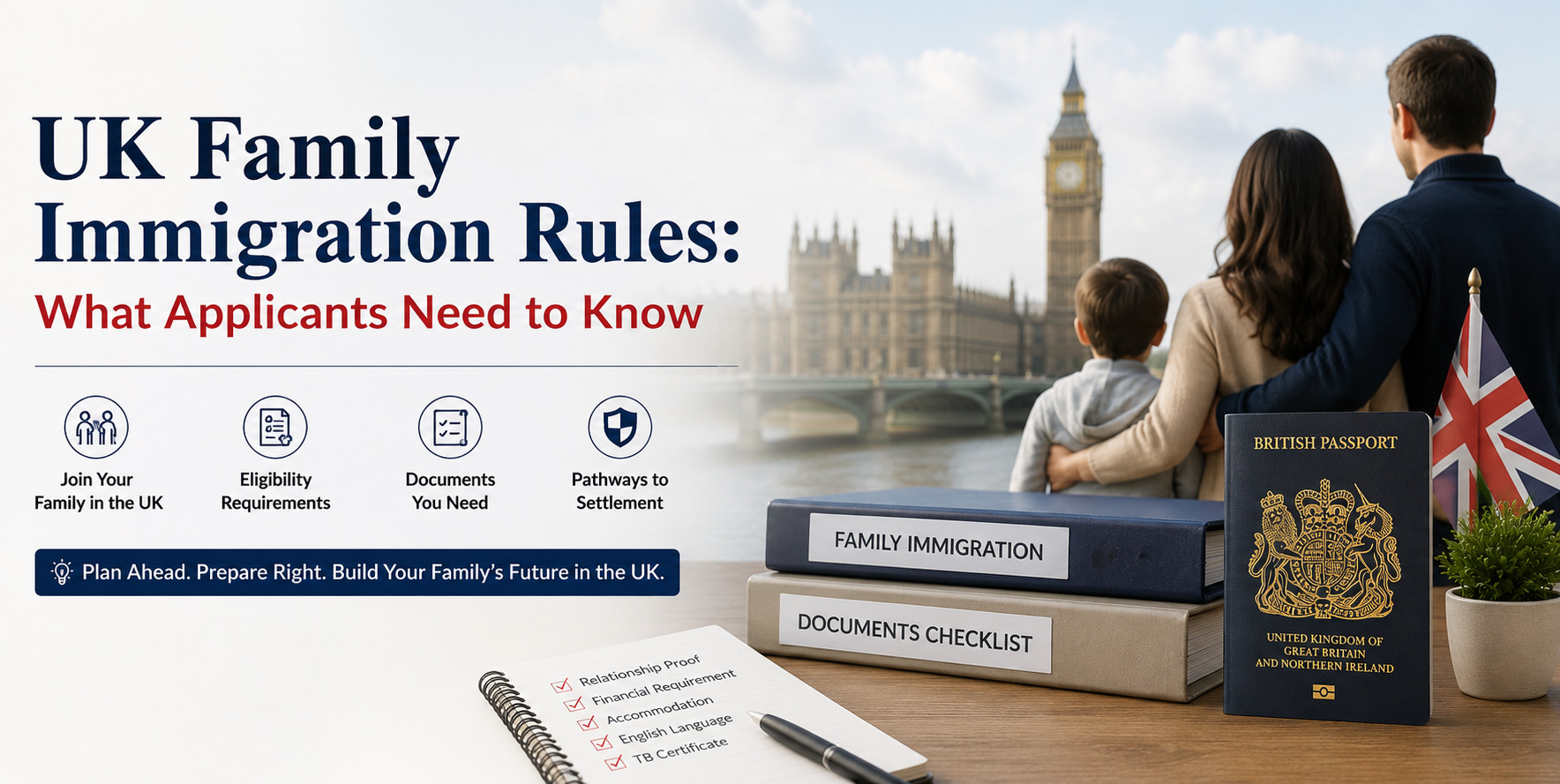
A marriage certificate proves you are married. It does not, on its own, prove to a Home Office caseworker that your relationship is genuine, that your finances meet the required threshold, or that your case will clear the suitability checks now built into almost every family route. That gap, between what applicants assume is "enough" and what the rules actually demand, is where most family visa applications run into trouble.
Family immigration UK cases have become noticeably more complex over the past two years. Financial thresholds have shifted, evidential expectations have tightened, and suitability rules that once applied mainly to criminal or asylum cases now reach directly into partner and parent applications. For anyone considering a UK Spouse Visa, a Partner Visa UK application, or a wider Family Visa UK route, understanding the current framework before applying can be the difference between a straightforward case and a refusal that takes months to unpick.
This article sets out what the family immigration UK framework actually requires: who qualifies, what evidence carries weight, and what has changed recently. Individual circumstances vary considerably, so this guide is a starting point rather than a substitute for advice from a properly regulated adviser.
Family immigration UK sits primarily within Appendix FM of the Immigration Rules, with refugee and humanitarian protection cases governed separately under Appendix Family Reunion. Together, these two frameworks cover most of the routes by which a family member can join someone already living in the UK.
Broadly, three types of case fall under this umbrella. The first is a UK Spouse Visa or Partner Visa UK application, for those joining a British citizen or a person settled in the UK. The second is a UK Relationship Visa route for unmarried or same-sex partners who can demonstrate a genuine, subsisting relationship equivalent to marriage. The third covers UK Dependent Visa applications, for those joining a sponsor already here on a work or study visa, a category with its own, narrower set of conditions.
It is worth being cautious about numbers here. Family routes have historically made up a modest proportion of total visas issued each year, and that proportion shifts year to year depending on policy changes, so current figures should always be checked against the Migration Observatory's briefing on family migration to the UK rather than a fixed number quoted online.
In everyday conversation, people use "spouse visa," "marriage visa" and "partner visa" almost interchangeably, but each carries slightly different evidential expectations under Appendix FM. A UK Spouse Visa or UK Marriage Visa applies where the couple is legally married or in a civil partnership recognised under UK law. A Partner Visa UK application, by contrast, is generally used where the couple is unmarried but has lived together in a relationship akin to marriage for at least two years. There is also a fiancé(e) route, for couples intending to marry within six months of arrival, our guide on the difference between a UK spouse visa and a UK fiancé visa sets out how the choice affects visa length and the path to settlement.
Refugee family reunion, covered by Appendix Family Reunion, is a distinct category. It generally allows a spouse, unmarried partner, or child under 18 to join a person who already holds refugee or humanitarian protection status, provided the relationship existed before the sponsor fled their country of origin. We've compared this with the general family routes in our post on refugee family reunion versus Appendix FM.
Separately, UK Dependent Visa routes allow the spouse, partner, or child of a Skilled Worker visa holder to join them, though dependant eligibility for Student visa holders has narrowed and now depends heavily on the course and sponsor. Our guide to the UK Dependant Visa walks through eligibility for each sponsor category.
Eligibility under family immigration UK rules depends heavily on which category applies, and the requirements are not interchangeable between them.
Both partners must be 18 or over. The UK-based sponsor must be a British citizen, someone with settled status, or, in limited circumstances, someone with a specific form of protection or leave. For a UK Spouse Visa or UK Marriage Visa, the marriage or civil partnership must be legally recognised in the UK. For a Partner Visa UK application on the unmarried-partner route, the couple must typically show at least two years of cohabitation equivalent to marriage.
Our post on how to bring your spouse or partner to the UK sets out the practical steps for this route, and our Spouse and Family Visa service covers how we support applicants through each stage.
The tests for parents and adult dependent relatives are considerably stricter than for partners. An adult dependent relative applicant must generally show a genuine, long-term need for care, due to age, illness or disability, that cannot reasonably be provided in their home country, even with financial support from the sponsor. This is one of the harder categories to satisfy, and shouldn't be treated as a routine extension of family reunification.
Under Appendix Family Reunion, eligibility is generally limited to spouses, unmarried partners, and children under 18 of a person recognised as a refugee or granted humanitarian protection. Adult children typically fall outside this route unless they can demonstrate exceptional circumstances, and the family relationship must usually predate the sponsor's departure from their country of origin.
Two things tend to decide whether a family visa UK application succeeds or fails: the financial evidence, and the evidence of a genuine relationship. Both are assessed closely, and both are frequently the reason for refusal when applications go wrong.
The sponsor's income must meet a minimum threshold, intended to demonstrate that the couple can support themselves without recourse to public funds. This figure has changed more than once in recent years, and government policy in this area continues to be reviewed, so applicants should always check the current threshold on GOV.UK's family visa guidance rather than relying on a number quoted in an article that may be out of date by the time it's read. Savings can, in defined circumstances, be used to supplement or substitute income evidence, and self-employed sponsors face a different, more document-heavy evidential path. Our detailed breakdown of income proof documents for the current minimum income requirement covers what's typically accepted for employed, self-employed, and savings-based cases.
GOV.UK's guidance on what information to provide sets out the general categories of supporting evidence: joint tenancy agreements, utility and council tax bills in both names, joint bank statements, marriage or civil partnership certificates, and correspondence sent to a shared address. Evidence should be recent, verifiable, and drawn from more than one independent source, rather than a single document repeated in different forms.
Couples who live apart for work or study reasons face a slightly different evidential burden, since day-to-day cohabitation evidence isn't available. Here, communication records, visit history, and financial support between partners tend to carry more weight. Our post on proving a genuine relationship for a UK Spouse Visa covers common evidential mistakes.
Most partner and parent applicants must also demonstrate a required level of English, usually through an approved test, unless they qualify for an exemption on the basis of age, a recognised disability, or nationality.
This is the area of family immigration UK rules that has shifted most significantly, and it deserves careful attention regardless of how straightforward the rest of an application might otherwise be.
Suitability requirements, which determine whether an applicant can be refused on character or conduct grounds, have been consolidated and extended to apply in full across family and private life applications, covering partner, parent, child, and adult dependent relative categories alike. The core change: a custodial sentence of 12 months or more now generally leads to mandatory refusal, replacing the previous approach that allowed a route back into eligibility after a set number of years for shorter sentences. Discretionary grounds also apply to any conviction, persistent offending, or conduct considered to cause serious harm. See this summary of the new suitability rules for spouse visas and family applications for more detail.
Importantly, these changes apply without transitional protection to people already on a family route, including those approaching a Spouse Visa Extension or settlement application. A conviction that would not previously have affected an extension may now do so. Limited exceptions exist for example, where a conviction relates to conduct not criminalised in the UK and some cases may still succeed on Article 8 (family and private life) grounds even against a mandatory refusal ground, though the evidential bar is high. Anyone approaching an extension or settlement application with a conviction on record, however old, would be well advised to seek advice first. Our overview of ILR pathway timelines across UK routes sets out how settlement typically progresses.
Given how fact-specific suitability assessments have become, advice from a properly regulated source carries real weight, the consequences of a misjudged application under the new rules can include a lengthy re-entry ban. The Immigration Advice Authority (IAA) regulates who may lawfully provide immigration advice in the UK, having taken over this role from the former Office of the Immigration Services Commissioner. Applicants can check an adviser's registration via the IAA's adviser finder before proceeding.
Family immigration UK rules combine clearly defined eligibility criteria with considerable individual assessment, particularly around finances, relationship evidence, and conduct. Assumptions carried over from a previous application don't always hold up under the current rules.
If you're preparing a UK Spouse Visa, Partner Visa UK, or Spouse Visa Extension application, it's worth speaking to an adviser before submitting rather than after a refusal. You can find out more about our family and spouse visa support or book an appointment with our team.
Explore the key benefits of British citizenship, from the British passport and voting rights to citizenship by descent and dual citizenship UK rules
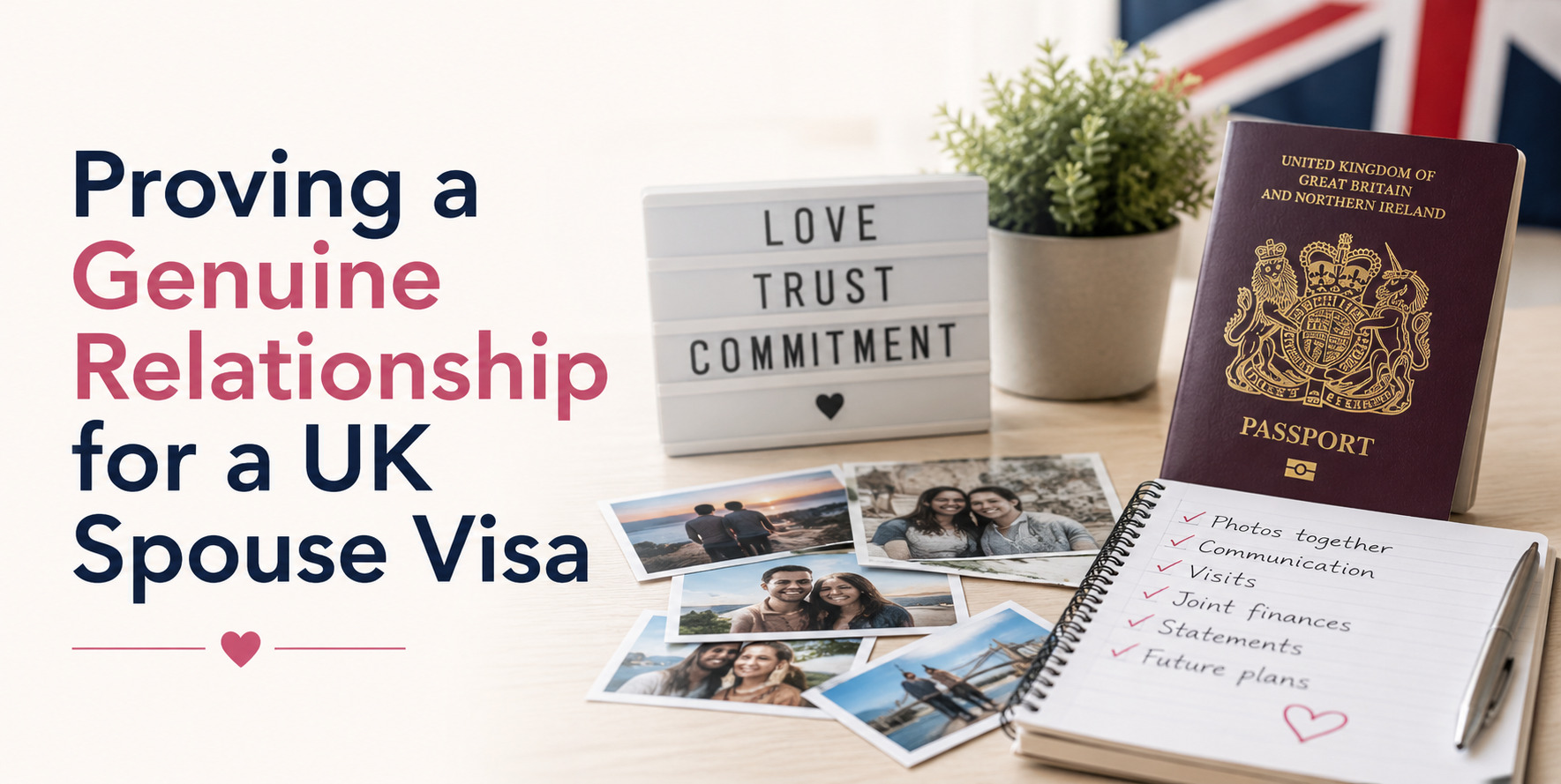
Learn how to prove a genuine relationship for a UK Spouse Visa with the right evidence, common mistakes to avoid, and practical guidance. Explore more.

A practical guide to choosing the right university to study in UK, covering courses, cost, admission and how it affects your student visa journey.
A calm, practical guide to the Life in the UK Test and the wider citizenship requirements for visa holders preparing to apply for naturalisation.
Dual Citizenship UK explained, fees, processing times, Naturalisation UK requirements, Citizenship by Descent, and the Life in the UK Test.
Struggling with your UK Visitor Visa application? Discover practical, adviser-led tips on documents, finances, home ties, and cover letters to boost approval.

Skilled Worker Visa UK eligibility depends on your occupation and role. Discover which jobs qualify and what employers need to check.
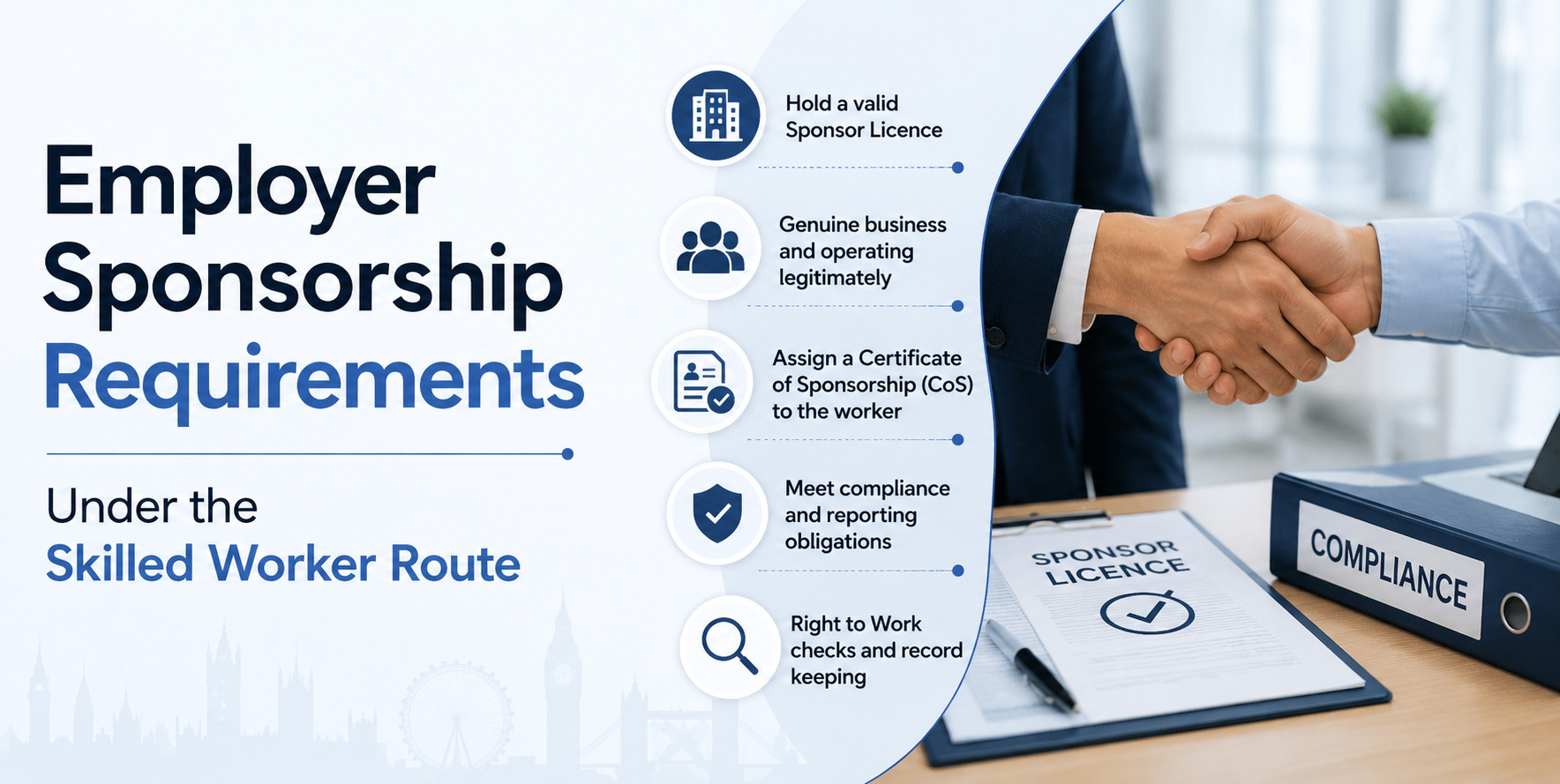
Learn the employer requirements for a Skilled Worker Visa UK, including sponsor licences, compliance duties, and hiring eligibility criteria. Explore more.
Applying for British Citizenship by naturalisation? Learn the eligibility rules, required documents, costs, and application steps. Explore more.
Discover how Indefinite Leave to Remain can offer long-term stability, work flexibility, and a path to British citizenship. Learn more today.
Standard processing is usually around 12 weeks from the date biometrics are provided, though this varies depending on location and how complete the supporting evidence is. Priority services may be available at extra cost for those who qualify.
A UK Spouse Visa applies to legally married couples or civil partners, while a Partner Visa UK application is generally used by unmarried couples who can show at least two years of cohabitation in a relationship equivalent to marriage. Evidential expectations differ slightly between the two.
It depends on the sentence length and nature of the offence. Following recent suitability changes, a custodial sentence of 12 months or more will generally lead to mandatory refusal, with limited exceptions. Shorter sentences or other conduct issues are assessed on a discretionary basis, so advice before applying is strongly recommended.
Yes. Dependents of Skilled Worker visa holders generally have a more established route than dependents of Student visa holders, where eligibility has narrowed and now depends heavily on the course level and sponsor.
The threshold has changed more than once in recent years and remains under review, so applicants should always confirm the current figure on GOV.UK rather than relying on a number quoted elsewhere. Savings can, in some cases, supplement or replace income evidence.

GMS Immigration is a trusted UK-based visa consultancy offering expert guidance for visitor, work, family, and settlement visas.With over 10 years of experience and a high success rate, they provide personalised, transparent support to help clients achieve their UK immigration goals.