

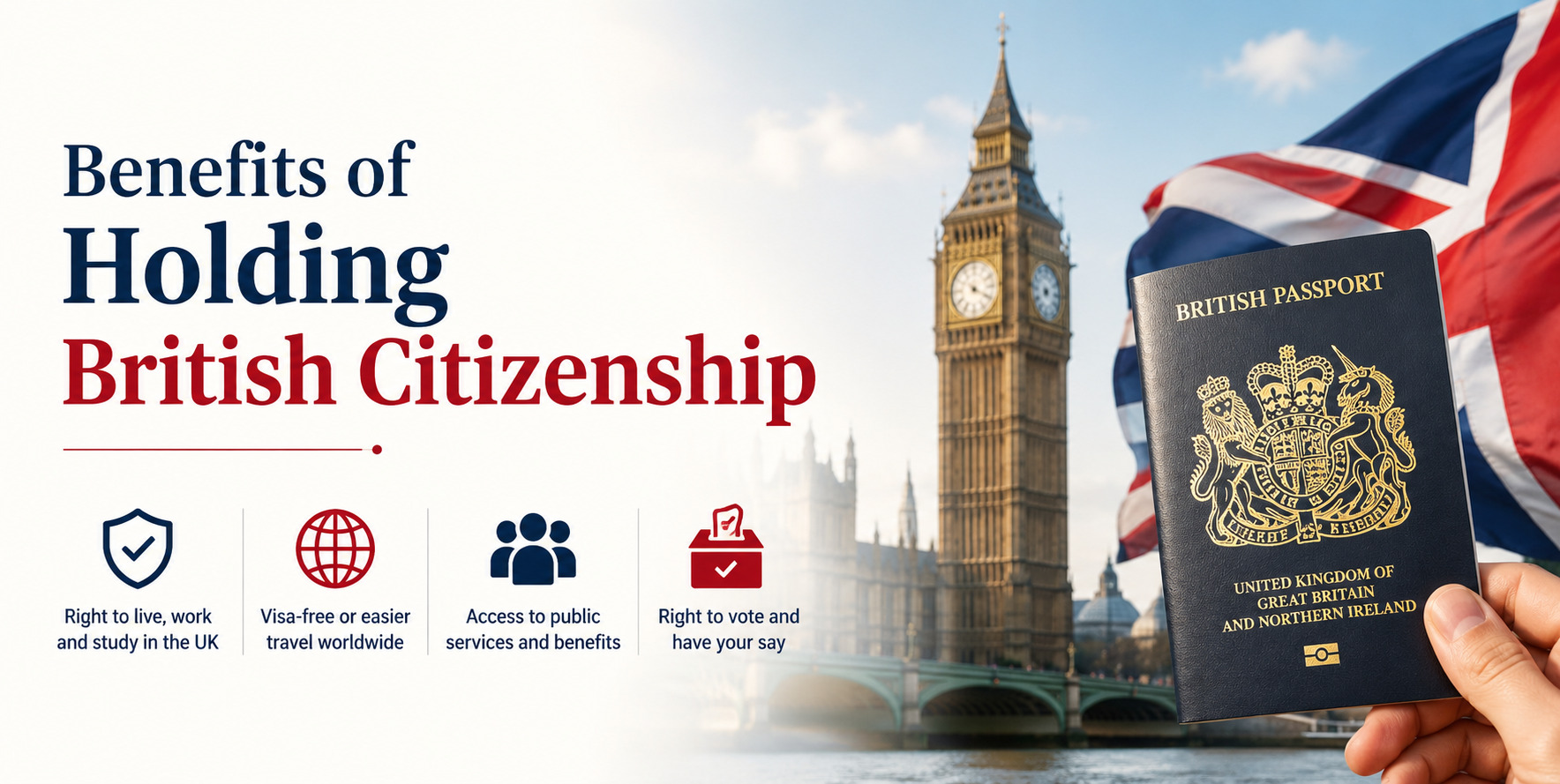
Indefinite Leave to Remain sounds permanent. In practice, it can lapse if you spend too long outside the UK, and under proposals in the government's 2025 Immigration White Paper, the road to it may soon get longer for new applicants.
British citizenship is different. Once granted, it cannot expire, cannot be lost through time spent abroad, and cannot be reopened by a future change in the rules. That distinction, between a status that depends on continued compliance and one that doesn't, is the starting point for understanding why so many long-term residents eventually choose to naturalise, even after years of holding settled status without apparent issue.
This article sets out the practical benefits of British citizenship: what changes once you hold a British passport rather than settled status, what the naturalisation UK process actually involves, and what to weigh up if your country of origin has its own views on dual citizenship UK. As with most areas of nationality law, individual circumstances vary considerably, and this is general guidance rather than a substitute for advice from a properly regulated adviser.
British citizenship is the most secure immigration status available under UK law. Indefinite Leave to Remain (ILR), by contrast, grants the right to live and work in the UK permanently but remains conditional: it can lapse after an extended continuous absence, and under current government proposals the qualifying residence period for ILR itself could be extended from five years to ten for many applicants. Citizenship removes that conditionality entirely.
British nationality is, technically, a broader legal category, of which British citizenship is one form (alongside British Overseas Territories citizenship and others). This article focuses specifically on British citizenship, since it's the status most applicants encounter and the one that carries a British passport with it.
Settled status gives permission to live in the UK without a time limit, but it's still, in a legal sense, a form of leave that can be affected by prolonged time abroad or, in narrow circumstances, conduct issues. British citizenship carries no such conditions and adds rights ILR does not, including the right to hold a British passport and to vote in all UK elections. Our post on Indefinite Leave to Remain: key benefits explained sets out what ILR does offer, for readers weighing up whether or when to take the next step.
Most adult applicants reach British citizenship through naturalisation, generally after holding ILR (or equivalent settled status) for at least 12 months, though those married to or in a civil partnership with a British citizen may become eligible sooner. Others apply through registration rather than naturalisation, including children and people with a historic entitlement. Many arrive at this stage via family or spouse routes; our guide on how to get British citizenship by marriage covers the shorter three-year residence route available to spouses and civil partners of British citizens, and our British Nationality service page covers how we support applicants through the wider process.
This is the practical heart of the matter: what actually changes, day to day, once someone holds British citizenship rather than settled status.
A British passport is the clearest, most visible benefit of British citizenship. It confirms nationality and allows visa-free or visa-on-arrival entry to a substantial number of countries — the precise figure shifts as international agreements change, so it's worth checking a current passport index rather than relying on a number quoted in an article that may already be out of date. A British passport also removes the need to carry a Biometric Residence Permit or eVisa share code when travelling, which simplifies journeys through UK border control considerably, and it typically speeds up re-entry to the UK itself, since British citizens use separate lanes at the border rather than queuing alongside visa holders and visitors.
British citizens can vote in all UK elections, including general elections, a right not extended to all visa holders or even all settled persons depending on their nationality (Commonwealth and Irish citizens are notable exceptions with existing voting rights). Citizens can also stand for public office, including Parliament, and serve on a jury without the restrictions that apply to some visa holders. There is also a meaningful difference in security: naturalisation, once granted, is not an entitlement that can be revoked for a change in immigration policy, though it can, in rare and serious cases, be removed through deprivation proceedings, for example, where citizenship was obtained by fraud or where deprivation is judged conducive to the public good. This is a narrow exception rather than a general risk, but it is worth knowing about rather than assuming citizenship is entirely unconditional.
British citizens face no restrictions on the type of work they undertake and aren't tied to sponsorship, unlike those on an Appendix Skilled Worker visa, whose employment depends on a licensed sponsor and specific role. Citizens are also not subject to the "no recourse to public funds" condition that applies to many visa categories, meaning full eligibility for means-tested benefits where individual circumstances would otherwise qualify. For readers still comparing their current visa route, our guide to the UK Dependant Visa sets out how sponsor-linked status compares with the freedom citizenship brings.
British citizens can generally pass citizenship to children, including those born outside the UK, though the rules differ depending on whether the parent is a citizen "by descent" or "otherwise than by descent." We cover this distinction in full a little further down, since it's one of the more technical areas of nationality law and worth understanding properly rather than assuming it works the same way as a passport renewal.
The general requirements for naturalisation UK include holding ILR or settled status for the qualifying period (12 months for most applicants, though those married to a British citizen may apply after three years of residence without a separate ILR-holding period), meeting a residence requirement, broadly, no more than 450 days' absence in the five years before applying, or 270 days in three years for spouses and civil partners of British citizens — being of good character, and meeting the knowledge of English and Life in the UK requirements. The application also requires biometric enrolment and, once approved, attendance at a citizenship ceremony before the certificate of naturalisation is issued. Absence limits, fees and residence rules are reviewed periodically, so applicants should always check current guidance on GOV.UK's naturalisation booklet before calculating their own qualifying date, rather than relying on a fixed figure. Our ILR pathway timelines post is a useful companion here, since naturalisation timing depends directly on the settlement route taken.
Most adult applicants must pass the Life in the UK Test, a multiple-choice assessment covering British history, traditions and public life, alongside evidence of English language ability through an approved qualification, a degree taught in English, or an exempt nationality. A common misconception is that the test covers current affairs or government policy, it doesn't; it's drawn from a fixed handbook of civic and historical content. Our dedicated guide on the Life in the UK Test and citizenship requirements covers how to prepare for it alongside the wider eligibility criteria.
The most frequent refusal grounds are, calmly stated: absences exceeding the permitted limits, undeclared cautions or convictions, discrepancies between the citizenship application and earlier visa applications, and outstanding tax or immigration compliance issues. Self-employed applicants, in particular, are sometimes caught out by mismatches between declared income on a previous visa application and HMRC records, which caseworkers routinely cross-check. Because there is no right of appeal against a refused naturalisation application, and the fee is not refunded, it's worth treating this as a single, carefully prepared attempt rather than a routine form-filling exercise. Our detailed British Citizenship by Naturalisation application guide and our document checklist for British citizenship both go into this in more depth.
The UK permits dual citizenship UK without restriction, meaning becoming a British citizen does not require giving up an existing nationality as far as UK law is concerned. However, some other countries do not recognise or permit dual nationality, and in certain jurisdictions, acquiring British citizenship can affect an existing passport automatically. It's worth checking your country of origin's position, ideally with its consulate or an adviser familiar with that jurisdiction, before applying, rather than assuming the UK's permissive approach is the only one that matters. Our post on dual citizenship in the UK: rules and regulations covers this alongside fees and processing times.
Citizenship by descent is one of the more technical corners of British nationality law. Broadly, a child born outside the UK to a British citizen parent who is themselves a citizen "otherwise than by descent" generally acquires British citizenship automatically. However, where the parent is a citizen "by descent", that is, they themselves were born abroad to a British parent, the child does not usually acquire citizenship automatically, and registration may be needed instead, subject to residence conditions being met by the parent. This is sometimes called the "one generation" rule, and it exists specifically to prevent citizenship passing down indefinitely to people with no ongoing connection to the UK. GOV.UK's guidance on applying for citizenship through a British parent and Citizens Advice's guide to British citizenship for children both set out the details, and errors in this area can affect a child's status long after birth, which makes early advice worthwhile.
British citizenship offers real, lasting benefits over settled status: an unconditional right to remain, a British passport, full voting rights, and the ability to pass citizenship on to children in the right circumstances. None of that changes the fact that naturalisation UK still carries strict eligibility and evidential requirements, and that a refused application isn't refunded or appealable. For many people, the right moment to apply is as soon as they qualify, rather than waiting, particularly given how often the wider rules around settlement and citizenship are subject to review.
If you're checking your eligibility for naturalisation, preparing for the Life in the UK Test, or trying to understand how dual citizenship UK rules might affect your existing nationality, it's worth confirming your position with a regulated adviser before applying. Applicants can check whether an adviser is properly authorised through the Immigration Advice Authority's adviser finder. You can find out more about our British Nationality service or book an appointment with our team to discuss your specific circumstances.
Up-to-date guide to the UK family immigration rules, covering Appendix FM, evidence requirements and recent suitability changes for family visa applicants.

Learn how to prove a genuine relationship for a UK Spouse Visa with the right evidence, common mistakes to avoid, and practical guidance. Explore more.

A practical guide to choosing the right university to study in UK, covering courses, cost, admission and how it affects your student visa journey.
A calm, practical guide to the Life in the UK Test and the wider citizenship requirements for visa holders preparing to apply for naturalisation.
Dual Citizenship UK explained, fees, processing times, Naturalisation UK requirements, Citizenship by Descent, and the Life in the UK Test.

Struggling with your UK Visitor Visa application? Discover practical, adviser-led tips on documents, finances, home ties, and cover letters to boost approval.

Skilled Worker Visa UK eligibility depends on your occupation and role. Discover which jobs qualify and what employers need to check.

Learn the employer requirements for a Skilled Worker Visa UK, including sponsor licences, compliance duties, and hiring eligibility criteria. Explore more.
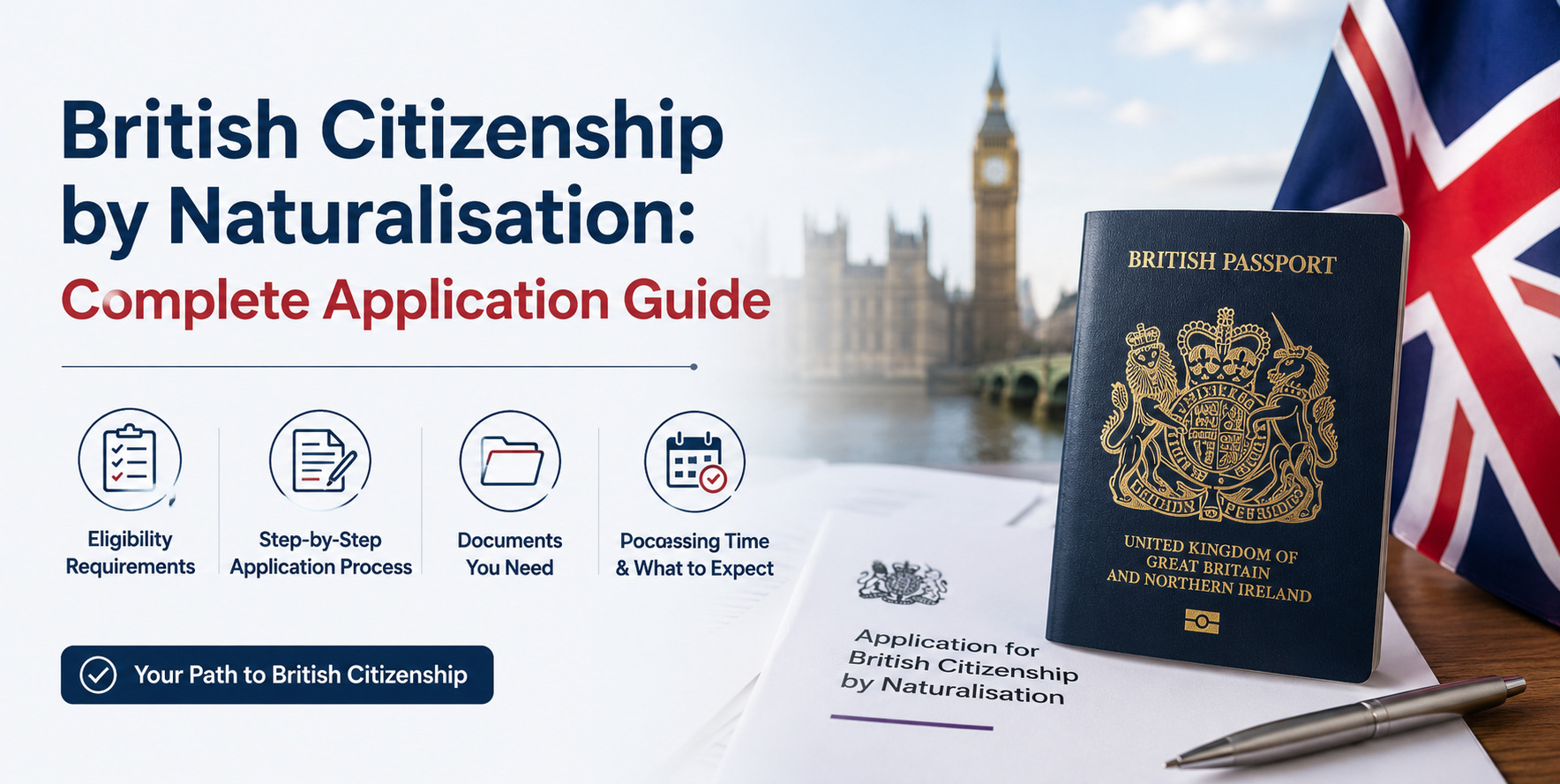
Applying for British Citizenship by naturalisation? Learn the eligibility rules, required documents, costs, and application steps. Explore more.
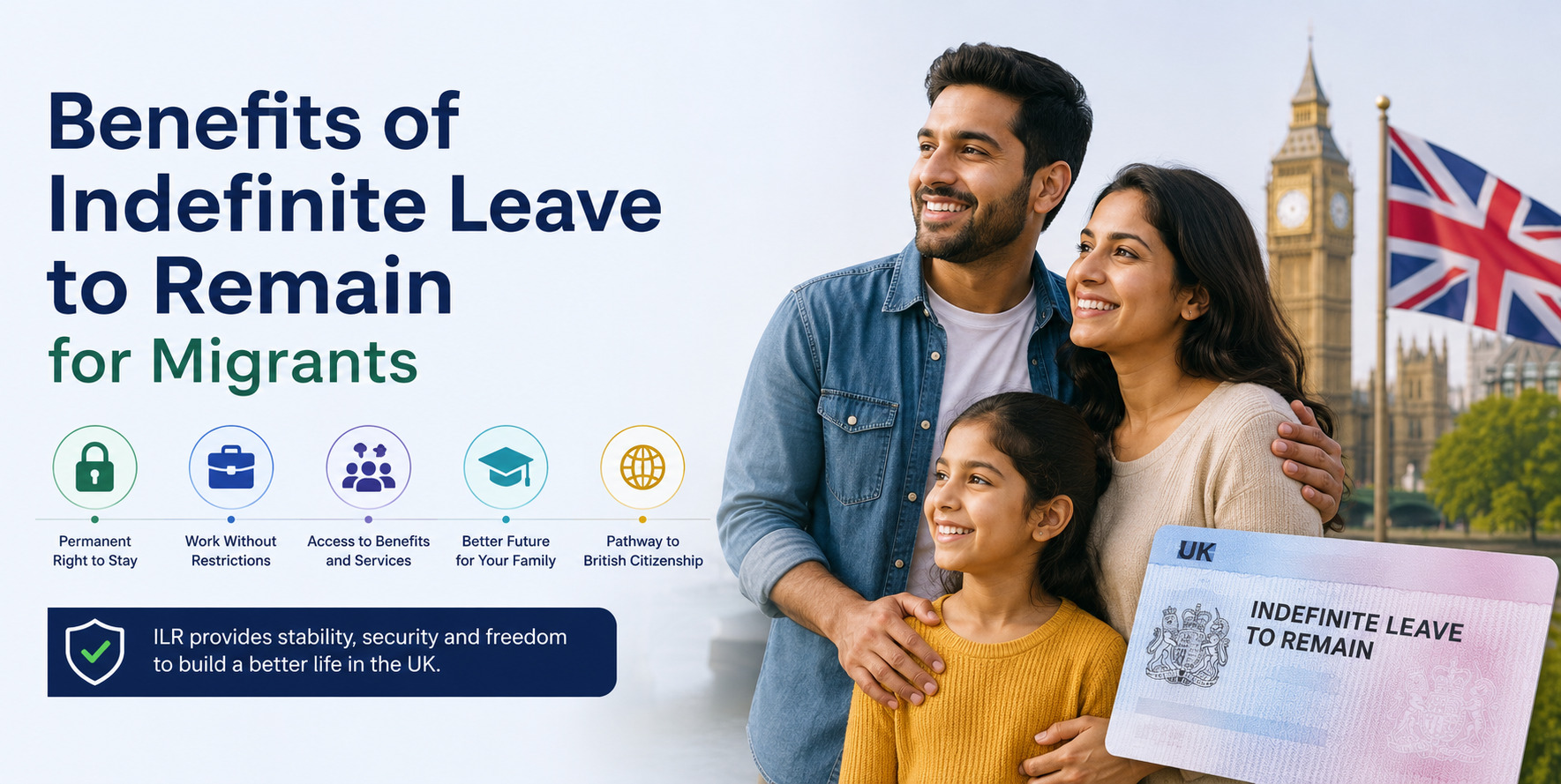
Discover how Indefinite Leave to Remain can offer long-term stability, work flexibility, and a path to British citizenship. Learn more today.
British citizenship is a permanent nationality status that cannot lapse because of time spent outside the UK, unlike ILR. It also allows you to apply for a British passport and access additional legal rights.
Most adults applying through Naturalisation UK must pass the Life in the UK Test and meet the English language requirement unless they qualify for an exemption under the Immigration Rules.
Yes. The UK permits Dual Citizenship UK, so you do not have to give up your existing nationality under UK law. However, you should check whether your home country recognises dual nationality before applying.
In some cases, yes. Citizenship by Descent depends on how the British citizen parent acquired their nationality, so eligibility varies according to the British Nationality Act and Home Office rules.

GMS Immigration is a trusted UK-based visa consultancy offering expert guidance for visitor, work, family, and settlement visas.With over 10 years of experience and a high success rate, they provide personalised, transparent support to help clients achieve their UK immigration goals.