

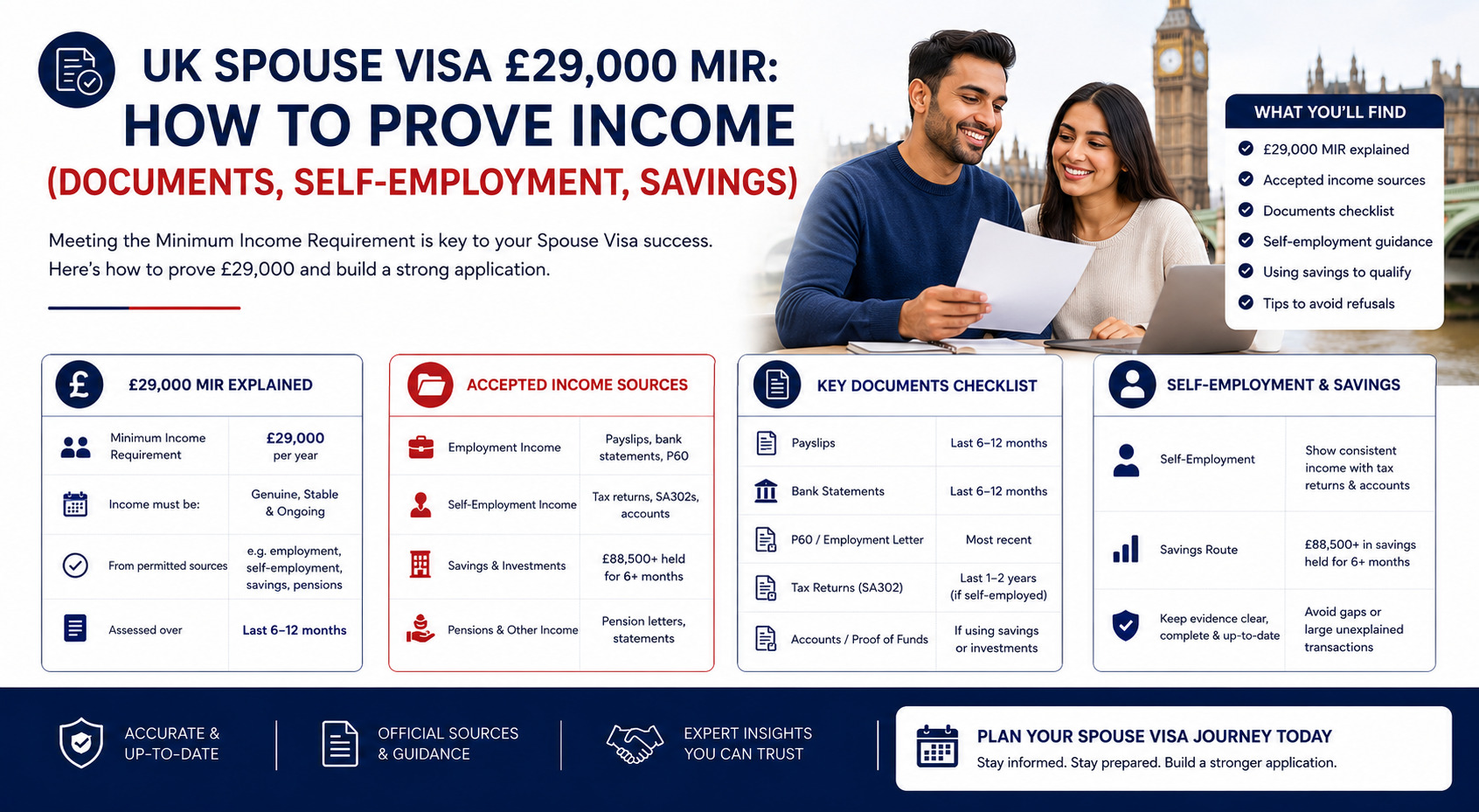
The £29,000 figure is what most people notice first. It is also where many online discussions stop.
But for a large number of spouse visa applicants, the real difficulty starts after that. The issue is often not whether the required income exists. It is whether the paperwork shows it in the way the Home Office expects.
Someone can be earning above the threshold and still run into problems if their records do not match, if a required document is missing, or if the evidence falls outside the period set by the Immigration Rules. That is why the UK spouse visa £29000 MIR documents requirement has become such an important part of the application process.
Appendix FM and Appendix FM-SE set out detailed rules on how income must be evidenced. Whether the application relies on employment income, self-employment, savings, or a mixture of sources, the Home Office looks closely at the supporting records rather than the headline figure alone.
This guide explains the documents commonly used as spouse visa income proof, where applicants often face difficulties, and what should be checked before submitting financial evidence.
Before gathering payslips, bank statements, or tax records, it is important to understand what the financial requirement actually is and whether it applies to your application. This is where many applicants become confused, particularly when they read older guidance that still refers to the previous £18,600 threshold.
Under Appendix FM of the Immigration Rules, most partners applying for a family visa must show that they meet the Minimum Income Requirement (MIR). For applications made on or after 11 April 2024, the required level is generally £29,000 gross annual income. This is commonly referred to as the UK spouse visa £29000 MIR documents requirement because the Home Office assesses both the income itself and the evidence used to prove it.
The financial requirement is intended to show that a couple can maintain themselves in the UK without relying on public funds. In most cases, the sponsoring partner and applicant must demonstrate a gross annual income of at least £29,000 through one or more permitted income sources listed within Appendix FM and Appendix FM-SE. These may include employment income, self-employment income, pension income, property income, or qualifying cash savings.
Importantly, meeting the threshold is only part of the assessment. The Home Office also expects applicants to provide specified spouse visa income proof in the format required by the Immigration Rules. Missing or incorrect £29k MIR evidence can create difficulties even where the income level itself appears sufficient.
For applicants still assessing their eligibility, the UK Spouse Visa guidance can help explain the wider requirements alongside the financial rules.
The requirement generally applies where a British citizen, a person with settled status, or a person holding indefinite leave to remain is sponsoring their spouse, civil partner or qualifying unmarried partner under Appendix FM. It commonly affects:
However, transitional provisions remain important. Applicants who first entered the partner route before 11 April 2024 may continue to rely on the earlier financial threshold when extending their permission or applying for settlement with the same partner.
Because transitional arrangements can affect eligibility, applicants should always assess their own immigration history rather than relying on general online discussions.
Not every partner application is assessed against the £29,000 MIR.
Certain sponsors who receive specified disability-related or carer-related benefits may be exempt from the standard financial requirement. In these situations, the Home Office usually considers whether the couple can be adequately maintained and accommodated without recourse to public funds instead of applying the £29,000 threshold.
The evidential requirements for these cases differ significantly from standard financial requirement spouse visa applications, which is why applicants should ensure they follow the correct route from the outset.
This remains one of the most common questions applicants ask.
For new partner applications made on or after 11 April 2024, the £29,000 threshold does not increase because dependent children are included in the application. This differs from the previous framework, where additional amounts could apply for children.
That said, older financial thresholds may remain relevant in certain extensions or settlement cases that fall within transitional arrangements. This is another reason why applicants should check which version of the Immigration Rules applies to their circumstances before preparing their £29k MIR evidence bundle.
Once applicants understand whether the £29,000 threshold applies to them, the next step is often more challenging: identifying exactly which documents are required and ensuring the evidence satisfies Appendix FM-SE requirements.
Once you have confirmed that the financial requirement applies to your application, the next step is preparing the evidence.
The Home Office assesses financial evidence under Appendix FM-SE, which contains detailed specified evidence requirements. It is not enough to show that the income exists. Applicants must provide the correct documents in the correct format and covering the correct qualifying period.
Applicants relying on salaried or non-salaried employment will usually need:
Applicants relying on self-employment may need:
Applicants using the spouse visa cash savings route will usually need:
The Home Office reviews whether the financial records support each other.
For example:
Missing specified evidence remains one of the most common reasons financial requirement evidence is questioned during partner visa assessments under Appendix FM-SE.
Employment income is one of the most common ways applicants meet the financial requirement for spouse visa rules. However, the Home Office assesses employment income under different categories depending on the employment history and income pattern.
Category A usually applies where the sponsor or applicant has worked for the same employer for at least six months before the application date.
Applicants will normally need:
For salaried employment, the Home Office generally assesses the current annual salary at the date of application.
Category B is usually relevant where the sponsor has worked for their employer for less than six months or has a more complex employment history.
Applicants must normally show:
Because two separate calculations apply, Category B cases often require more detailed spouse visa income proof.
In some cases, yes.
Where a British citizen or settled person is returning to the UK with their partner, overseas employment income may be considered alongside evidence of prospective UK employment, depending on the requirements of Appendix FM.
For most employment-based UK spouse visa £29000 MIR documents applications, the Home Office will usually expect the following:
All documents should be consistent and cover the correct qualifying period. Differences between payslips, bank statements, or employer records can lead to further scrutiny during assessment.
Where income comes from a business rather than employment, different evidential rules apply under Category F and Category G of Appendix FM-SE.
Self-employment income can be used to meet the financial requirement spouse visa rules, but the Home Office applies different evidential requirements under Appendix FM-SE. These cases often require more supporting documents than standard employment-based applications.
For self-employed applicants, sole traders, partners and certain company directors, the Home Office usually assesses income under the following:
The relevant financial year for most UK self-employed applicants follows the HMRC tax year from 6 April to 5 April.
Depending on the business structure, spouse visa income proof may include:
Many UK spouse visa £29000 MIR documents issues arise because tax records, bank statements, and accounts do not fully match the reporting period required under Appendix FM-SE. Missing specified evidence can place an otherwise eligible application at risk, which is why financial records should be checked carefully before submission.
Yes. Applicants can rely on qualifying cash savings to meet the financial requirement spouse visa rules, either on their own or alongside certain permitted income sources under Appendix FM.
For applicants relying only on savings, the Home Office currently requires cash savings of at least £88,500.
This figure comes from the Appendix FM-SE formula:
£16,000 + (£29,000 × 2.5) = £88,500
The first £16,000 is disregarded under the Immigration Rules, while the remaining savings are assessed against the financial requirement over the standard 2.5-year partner visa period.
For most UK spouse visa £29000 MIR documents applications using savings, applicants will normally need the following:
The savings must usually have been held for at least six months before the application date unless a permitted exception applies, such as certain property sale proceeds.
Where employment income or self-employment income does not fully meet the financial requirement spouse visa threshold, applicants may be able to combine certain income sources with qualifying cash savings under Appendix FM.
Which Income Sources Can Be Combined?
Depending on the circumstances, applicants may combine the following:
The Home Office only permits combinations that fall within the categories set out in Appendix FM-SE.
Where savings are being used alongside income, the Home Office applies a specific calculation rather than simply adding the full savings balance to annual earnings. This is one reason why UK spouse visa £29000 MIR documents cases involving mixed income sources often require careful preparation.
Applicants should ensure that each income source is supported by the specified evidence required under Appendix FM-SE before submitting the application.
Many spouse visa refusals are not caused by insufficient income. They happen because the financial evidence does not meet the specified requirements under Appendix FM-SE.
Common issues include:
For many UK spouse visa £29000 MIR documents applications, the problem is not the income itself but the way the spouse visa income proof is presented. The Home Office assesses financial evidence against specific document requirements rather than general financial circumstances.
Before submitting an application, applicants should check that every document is consistent, covers the correct period, and satisfies the relevant Appendix FM-SE category requirements.
Before submitting a spouse visa application, applicants should review their £29k MIR evidence carefully against the requirements of Appendix FM-SE. Small document issues can create delays or raise questions during assessment.
For most UK spouse visa £29000 MIR documents applications, it is sensible to check that:
Where an application relies on self-employment, combined income sources or cash savings, additional checks may be needed because the spouse visa income proof requirements can become more complex.
A complete and consistent evidence bundle gives the Home Office a clearer basis on which to assess whether the financial requirement spouse visa rules have been met.
Some spouse visa applications are relatively straightforward. Others involve self-employment income, company director earnings, overseas income or a combination of different financial sources. In these cases, the evidential requirements under Appendix FM-SE can become more detailed.
For many UK spouse visa £29000 MIR documents applications, the challenge is not meeting the financial threshold itself. It ensures that the spouse visa income proof satisfies the specified document requirements and covers the correct assessment period.
Applicants often seek support where:
With our UK immigration services, we at GMS Immigration assist applicants with financial evidence reviews, document checks, and application preparation so that supporting records align more closely with the requirements of Appendix FM and Appendix FM-SE before submission.
For many UK spouse visa £29000 MIR documents applications, the key issue is ensuring that payslips, bank statements, tax records, savings evidence and supporting letters match the relevant income category and qualifying period. Missing or inconsistent spouse visa income proof can place an otherwise eligible application at risk.
Whether the application relies on employment income, self-employment, cash savings or combined sources, careful preparation remains important. Reviewing the evidence against Appendix FM-SE requirements before submission can help reduce avoidable issues and provide a clearer basis for the Home Office’s assessment.
Where financial circumstances are more complex, GMS Immigration can assist with document reviews, financial evidence checks, and partner visa application preparation to help applicants understand the requirements before submitting their case.
What Is The Minimum Income Requirement For A UK Spouse Visa In 2026?
For most new partner applications, applicants must usually show a combined gross annual income of at least £29,000 under Appendix FM. Different financial rules may apply where transitional arrangements or benefit-related exemptions are relevant. (gov.uk)
How Many Payslips Are Normally Required As Spouse Visa Income Proof?
Many applicants relying on employment income will usually need six months of payslips, matching bank statements and an employer letter. The exact evidence depends on the income category being used under Appendix FM-SE.
Can Cash Savings Be Used Instead Of Employment Income?
Yes. Qualifying cash savings can be used to meet the financial requirement spouse visa rules, provided the funds satisfy the Appendix FM-SE requirements. In many cases, the savings must have been held for at least six months before the application date.
Can Self-Employment Income Be Used For UK Spouse Visa £29000 MIR Documents?
Yes. Self-employment income can count towards the financial requirement, but applicants must provide specific evidence, such as HMRC records, business accounts, and bank statements under Category F or Category G of Appendix FM-SE.
What Is The Most Common Problem With UK Spouse Visa £29000 MIR Documents?
A common issue is inconsistency between payslips, bank statements, employer letters or tax records. Even where the income threshold is met, missing specified evidence can affect how the spouse visa income proof is assessed under Appendix FM-SE.
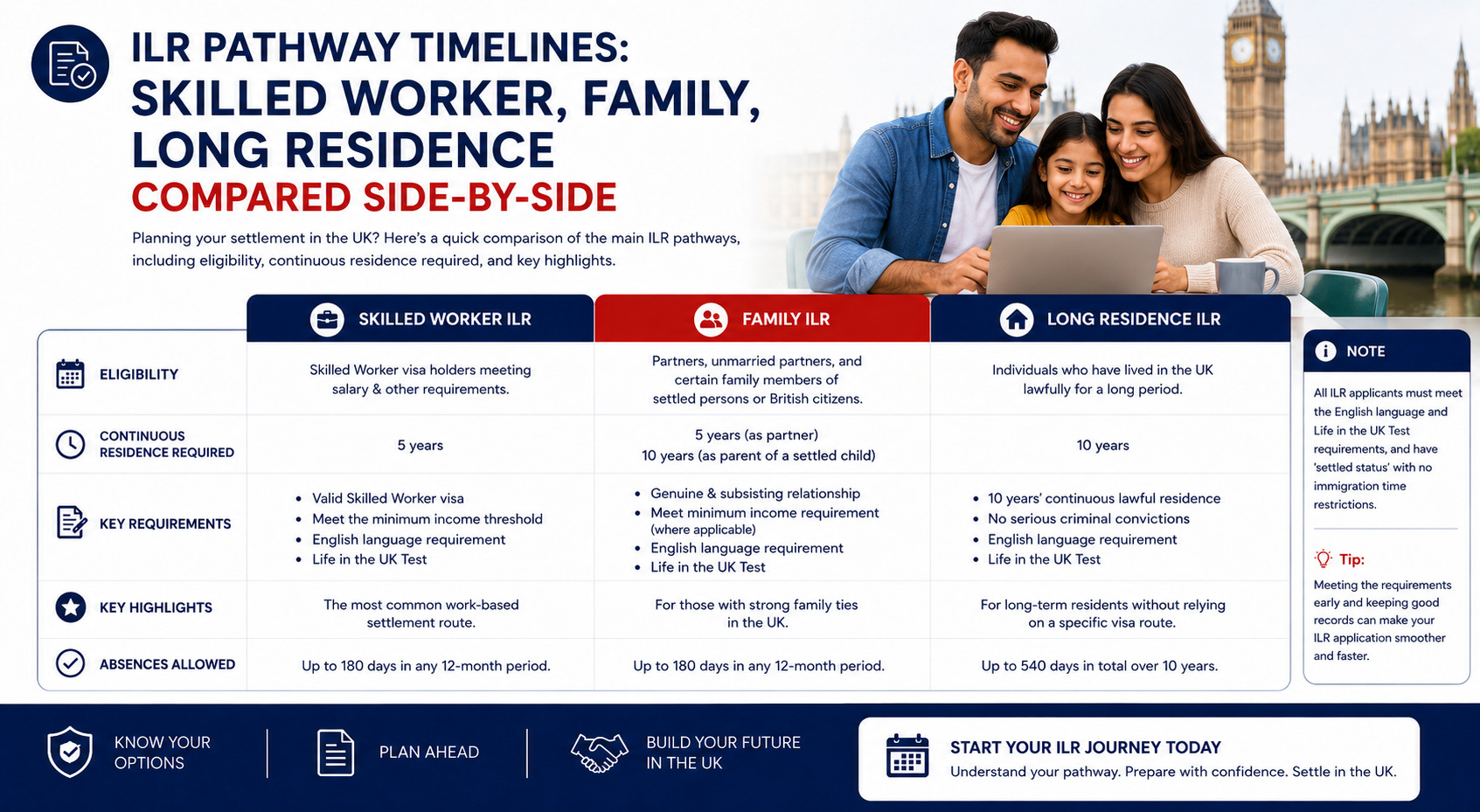
Explore ILR pathway timelines UK employers and migrants should understand across Skilled Worker, Family, and Long Residence routes. Learn more.

Discover how the Shortage Occupation List 2026 impacts reduced salary routes, sponsorship eligibility, and hiring plans for UK employers.
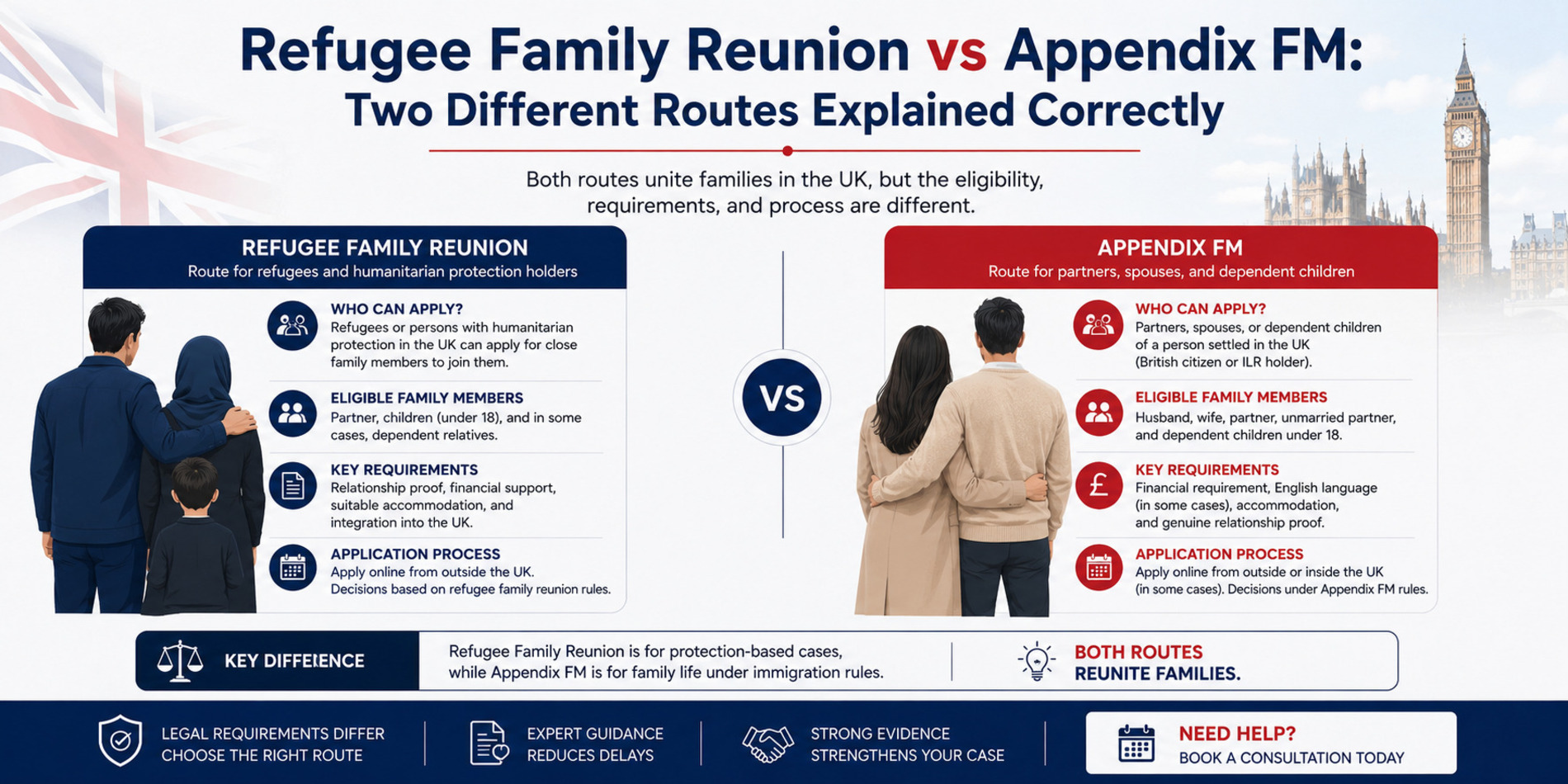
Confused about refugee family reunion UK and Appendix FM? Learn the key differences, eligibility rules, and the right route for your family. Explore now.
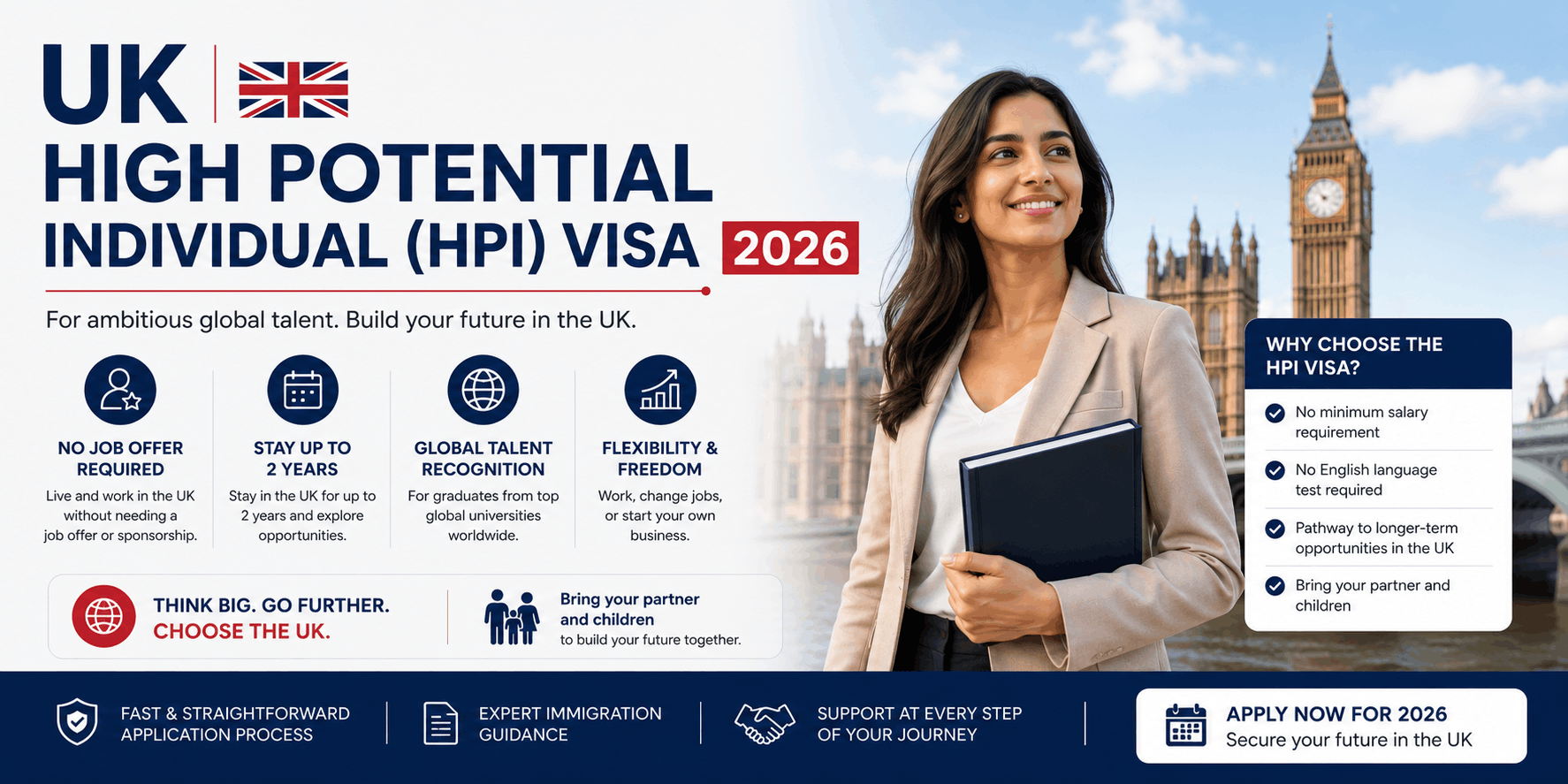
The UK High Potential Individual (HPI) visa lets graduates of the world’s top-ranked universities work, look for work, or run a business in the United Kingdom for two years (three years for PhD holders) without needing a job offer or a sponsor.

A UK Dependent Visa allows the spouse, civil partner, unmarried partner, or child under 18 of a main visa holder to live in the United Kingdom for as long as the main visa is valid.
Indefinite Leave to Remain (ILR) is the UK immigration status that lets you live, work and study in the United Kingdom without any time limit. Once granted, you can stay forever, switch jobs freely, claim public funds, and after 12 months you become eligible to apply for British citizenship.

Understand UK Student Visa Requirement, updates, eligibility, costs, and application steps for 2026. Explore your UK student visa application process.

UK Family Reunion Visa explained clearly—documents, process, and approval tips. Avoid common delays and apply with confidence. Learn more.

Apply for a Sponsor Licence UK with a clear step-by-step process. Avoid delays and errors. Learn what documents and checks matter most.

Explore the types of UK work visas in 2026 and find out which option best suits your skills, job role, and career goals.

GMS Immigration is a trusted UK-based visa consultancy offering expert guidance for visitor, work, family, and settlement visas.With over 10 years of experience and a high success rate, they provide personalised, transparent support to help clients achieve their UK immigration goals.