

A university offer letter is no longer enough to secure a UK study visa.
In 2026, the UK student visa requirement process has become far more compliance-driven. Universities are under pressure to monitor attendance. Financial checks are stricter. Digital visa systems are replacing physical immigration documents. Even small inconsistencies in bank statements or CAS details are now triggering refusals.
Many students spend months preparing for admission but lose time, money, and opportunities because they misunderstand the actual UK student visa criteria. This is why proper preparation is vital.
If you are planning to study in the UK this year, this guide explains the latest England study visa requirements, financial rules, application process, costs, and recent policy changes affecting international students. The information below reflects the latest guidance and recent updates from UKVI and education advisory sources.
If you need professional support during your UK student visa application, you can also explore UK Student Visa Services for personalised immigration guidance.
A UK Student Visa allows international students to study at an approved educational institution licensed by the UK Home Office.
This visa route replaced the old Tier 4 Student Visa system and now works under the UK’s points-based immigration framework.
Students applying under the route must receive a Confirmation of Acceptance for Studies (CAS) from an approved sponsor institution before starting the UK student visa application.
The visa generally allows students to:
The UK student visa requirement process applies to undergraduate, postgraduate, pathway, foundation, and doctoral programmes.
The United Kingdom uses a point-based immigration system. It is important to understand which category you fall into, as it decides your entire UK student visa application timeline and document requirements.
UK, Irish, and EU Settlement Scheme holders don’t require a student visa. British and Irish citizens have the full right to study in the UK without any immigration permission. EU, EEA, and Swiss nationals who obtained settled or pre-settled status under the EU Settlement Scheme before the June 2021 deadline also retain their right to study freely. However, EU citizens who did not apply for settlement before the deadline are now treated the same as other international students and must apply for a Student Route visa.
Students usually require a visa if they are:
The UK student visa requirements apply whether you are studying in London, Manchester, Birmingham, Leeds, Glasgow, or any other UK city.
Students from some countries may also need additional compliance documents, such as tuberculosis certificates, before proceeding with the UK student visa application.
Understanding the full UK education visa requirements early helps students avoid common application errors. Below is the complete checklist most applicants need during the student visa procedure for the UK.
Your passport must remain valid throughout the application process. Damaged passports or passports nearing expiry often create delays.
The Confirmation of Acceptance for Studies (CAS) is one of the core UK student visa requirements.
This electronic document contains:
Every detail must match your supporting documents exactly.
Students usually need:
Academic progression matters heavily under the current UK student visa criteria.
Most students must prove English proficiency through approved exams such as:
The required score depends on the institution and course level.
Students applying from certain countries must provide a TB certificate from an approved clinic. Indian applicants usually require this document as part of the UK student visa requirement process.
Financial evidence is one of the strictest UK study visa requirements.
Accepted documents may include:
Many refusals happen because students submit incomplete or incorrectly formatted financial evidence.
Certain science, engineering, and research courses require an ATAS clearance certificate before the UK student visa application can proceed.
Financial evidence remains one of the biggest reasons behind UK student visa refusals. The Home Office wants proof that students can genuinely support themselves during studies.
Under current UK education visa requirements, students usually need to show enough money for:
For courses in London, students usually need to show:
For courses outside London:
These maintenance funds apply for a maximum of 9 months.
One of the most misunderstood UK student visa criteria involves the 28-day financial rule. Students must hold the required funds continuously for at least 28 consecutive days before applying. The closing balance date should usually not be older than 31 days before submission.
The UK student visa requirement rules generally accept the following:
Large unexplained deposits often create concerns during the student visa procedure for the UK.
The student visa cost in the UK includes more than the visa fee itself.
Students should budget for:
The standard UK Student Visa fee is currently around £524 for overseas applicants. The Immigration Health Surcharge is charged separately and depends on visa duration. For many students, the full student visa cost in the UK becomes significantly higher once healthcare and document preparation expenses are added.
The UK student visa application process involves several stages. Accuracy matters at every step.
Students first receive an unconditional offer from a licensed UK institution. After tuition deposit payments and compliance checks, the university issues the CAS.
Before beginning the UK student visa application, gather:
Students should carefully review document consistency before submission.
The application is submitted online through the official UK government portal.
Applicants enter:
Even small mistakes can create delays later.
Students pay:
Payment confirmations become part of the official application record.
Applicants attend a visa centre to provide the following:
The UK’s digital visa transition is reducing physical documentation requirements for many applicants.
Some students receive interview requests from UKVI.
Questions often focus on:
Weak interview performance can affect the UK student visa application outcome.
Here is how you can prepare for interview questions.
Processing times vary during peak admission periods. Sometimes, processing time may take around three weeks. Students should avoid confirming travel plans before visa approval.
Several major policy developments are reshaping the UK student visa requirement process in 2026.
The UK is moving fully towards digital immigration status systems. Physical BRPs and visa stickers are gradually being phased out for many applicants. Students now manage immigration status through UKVI online accounts and digital share codes.
Universities now face tighter compliance monitoring.
Institutions must maintain strong enrolment and course completion rates to protect sponsorship licences. This directly affects CAS issuance and monitoring responsibilities.
Current guidance indicates that Graduate Route permissions may be reduced for some students applying after January 2027.
Bachelor’s and master’s graduates may eventually receive shorter post-study work periods compared to earlier policies.
The Home Office is paying closer attention to:
This is why the UK student visa criteria now require much stronger financial preparation than before.
Dependent visa rules remain tighter than in previous years. Most taught master’s students can no longer bring dependants unless they qualify under limited exceptions, such as research programmes. This has created challenges for applicants planning to bring spouse on student visa routes under the updated UK immigration rules.
The updated England student visa requirements are changing how students prepare for UK education.
Students can no longer arrange finances at the last minute.
The 28-day financial rule means applicants need organised planning well before the UK student visa application begins.
Institutions are now reviewing:
Students with unclear academic plans may face CAS delays or additional questioning.
The latest UK education visa requirements leave very little room for documentation errors.
Simple inconsistencies between bank statements, passports, academic records, or CAS details can now create major problems.
Because Graduate Route policies continue evolving, students increasingly need realistic career and immigration planning before choosing courses.
The UK student visa requirement process is no longer only about securing admission. Long-term compliance now matters throughout the student journey.
Understanding refusal trends can help students avoid mistakes.
Common refusal reasons include:
This remains one of the largest refusal categories.
Problems include:
Incorrect course information or sponsor details can delay or affect decisions.
Students unable to explain course choices or future goals may face concerns regarding genuine study intentions.
Missing documents continue to create avoidable refusals during the student visa procedure for the UK.
The UK student visa requirement process looks simple online. In practice, immigration rules are detailed and heavily compliance-focused.
Professional advisers can help students:
If you are planning to study in the UK, GMS Immigration can help you navigate the full process with structured immigration support.
Ultimately, where you live can significantly influence your student journey, from daily routine and study habits to overall well-being. So, choosing the right guidance is important.
Also, the latest UK student visa requirement rules involve strict financial checks, digital immigration systems, compliance monitoring, and stronger credibility assessments.
Before applying, review every document carefully, prepare your finances properly, and understand the current UK student visa criteria in detail. Small mistakes now carry much bigger consequences than before.
We at GMS Immigration specialise in helping students turn their dreams into reality with expert guidance on their student visa process. We offer expert guidance and have experience in handling a wide range of student visa cases.

A practical guide to choosing the right university to study in UK, covering courses, cost, admission and how it affects your student visa journey.
A calm, practical guide to the Life in the UK Test and the wider citizenship requirements for visa holders preparing to apply for naturalisation.
Dual Citizenship UK explained, fees, processing times, Naturalisation UK requirements, Citizenship by Descent, and the Life in the UK Test.

Struggling with your UK Visitor Visa application? Discover practical, adviser-led tips on documents, finances, home ties, and cover letters to boost approval.

Skilled Worker Visa UK eligibility depends on your occupation and role. Discover which jobs qualify and what employers need to check.

Learn the employer requirements for a Skilled Worker Visa UK, including sponsor licences, compliance duties, and hiring eligibility criteria. Explore more.
Applying for British Citizenship by naturalisation? Learn the eligibility rules, required documents, costs, and application steps. Explore more.

Discover how Indefinite Leave to Remain can offer long-term stability, work flexibility, and a path to British citizenship. Learn more today.
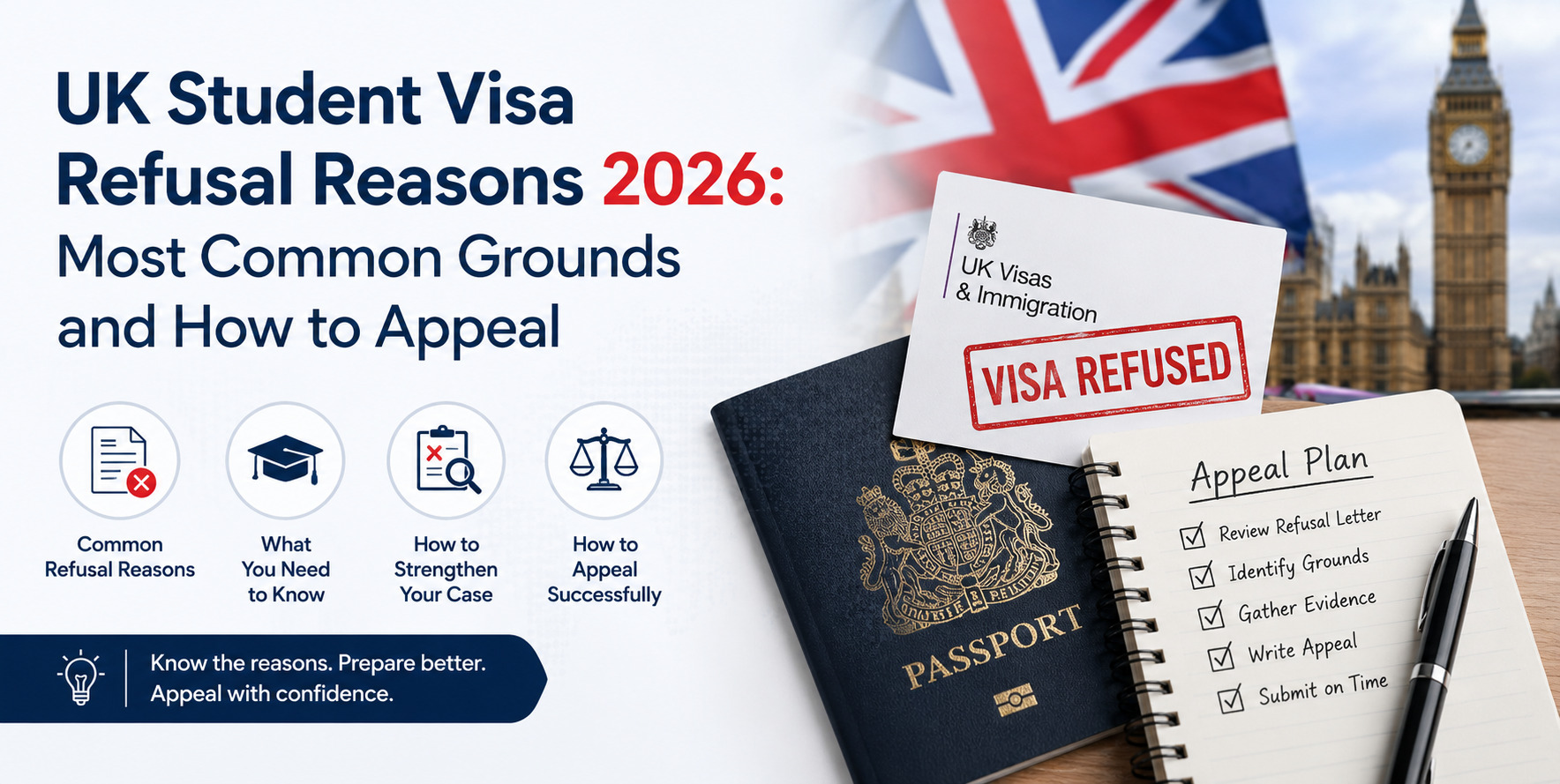
Understand the most common UK student visa refusal reasons in 2026 and learn when to appeal or reapply. Explore your next steps with confidence.
Use our Immigration Skills Charge calculator to estimate sponsorship costs per worker. Discover what UK employers actually pay and plan ahead.
Students usually need to show outstanding tuition fees plus living expenses for up to 9 months. The exact amount depends on whether the institution is inside or outside London.
The standard visa fee is currently around £524, excluding the Immigration Health Surcharge and additional document-related costs.
Processing times vary by country and season. Peak admission periods may take longer.
Yes. Most students can work up to 20 hours weekly during term time and full-time during official holidays.
The UK is transitioning towards digital eVisas for many applicants. Immigration status is increasingly managed online through UKVI accounts.
Common reasons include incorrect financial evidence, weak credibility interviews, CAS inconsistencies, and incomplete documentation.

GMS Immigration is a trusted UK-based visa consultancy offering expert guidance for visitor, work, family, and settlement visas.With over 10 years of experience and a high success rate, they provide personalised, transparent support to help clients achieve their UK immigration goals.