

A university offer and a Confirmation of Acceptance for Studies (CAS) are not enough to secure a Student visa. Every year, applicants with genuine study plans are refused because their financial evidence does not meet the requirements in the Appendix Student. In many cases, the issue is not the amount of money available but whether the funds were held correctly, evidenced correctly, and maintained for the required period.
The UK student visa maintenance funds requirement is a core part of the Student visa application process. It is designed to demonstrate that a student can pay any outstanding tuition fees and support themselves during their stay in the UK without relying on public funds. Under Appendix Student, applicants typically need to show funds for two categories: unpaid course fees and living costs. These are assessed independently, and both must be supported by the correct evidence. The Home Office also applies strict rules regarding how long the money must be held and when the financial documents must be issued.
This is why maintenance funds remain one of the most common areas where Student visa applications encounter difficulties. A balance that falls below the required amount, a bank statement issued outside the permitted timeframe, or a misunderstanding of the 28-day rule can affect the outcome of an otherwise strong application.
If you are planning to study in the UK, it is important to understand these rules before submitting your application. Alongside our Student Visa guidance, this article explains the exact maintenance fund amounts for 2026, the student visa savings requirement, acceptable financial documents, and how the 28-day rule works in practice so you can prepare your application with greater confidence.
Under Appendix Student, the Home Office defines the financial requirement as a mandatory cash reserve that applicants must hold to prove they can fully support themselves without relying on public funds. The core purpose of these UK student visa maintenance funds is to guarantee that international arrivals are financially self-sufficient throughout their studies.
To satisfy this regulatory standard, you must demonstrate a clear student visa savings requirement that covers two distinct elements:
Caseworkers scrutinise financial records under the Genuine Student requirement to assess your financial preparedness and study intent. Submitting correct documentary evidence is paramount, as arbitrary transfers or failing the 28-day rule student visa leads to an immediate, non-discretionary visa refusal.
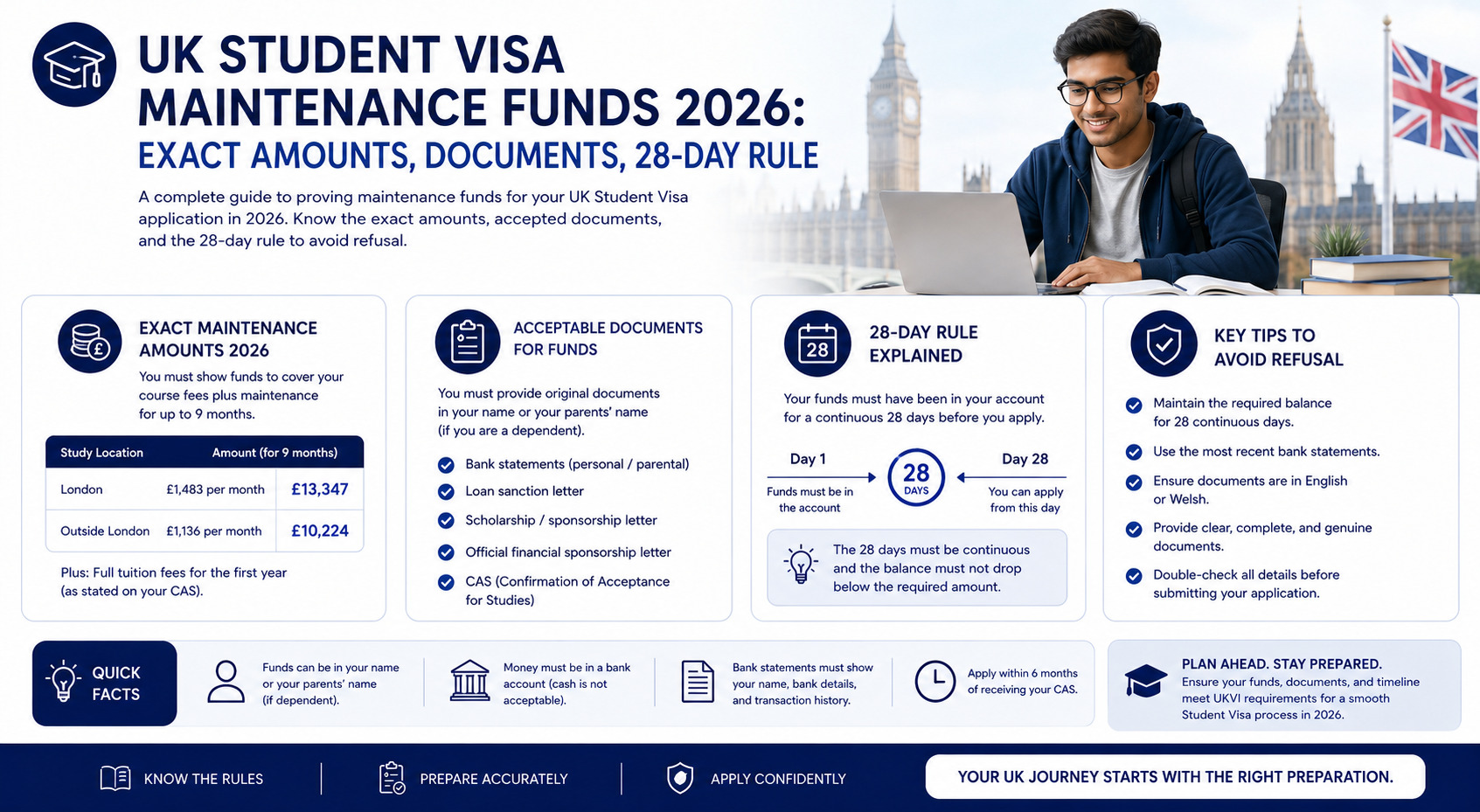
The financial requirements under Appendix Student are strictly defined by your study location and course length. For the 2026 entry, the Home Office has established precise monthly thresholds to ensure students can cover their living expenses without public assistance.
If your institution is located within the City of London or any of the 32 London boroughs, you must demonstrate £1,529 per month in UK student visa maintenance funds. This living cost component is capped at a maximum of nine months.
For all UK universities located outside the London boroughs, the monthly maintenance rate is £1,171.
The total student visa savings requirement is not limited to living costs; you must also show funds for any outstanding first-year tuition fees. Caseworkers use your Confirmation of Acceptance for Studies (CAS) to verify these fees. Any tuition payments or deposits already recorded on your CAS are directly deducted from your total requirement.
To establish your final financial threshold, apply this official formula: Total Funds Required = Outstanding Tuition Fees + Living Cost Maintenance
To calculate your UK student visa maintenance funds with complete precision, you must first extract key data from your Confirmation of Acceptance for Studies (CAS). Caseworkers cross-reference your financial documents directly with this electronic record. You will need the following information:
Your programme duration dictates the exact amount of student maintenance UK funds you must show.
To understand how these elements combine to form your total student visa savings requirement and to ensure you satisfy the 28-day rule student visa guidelines, consider these scenario-based calculations:
The 28-day rule student visa requirement is a statutory mandate designed to prove that the capital presented for your application is stable and genuinely available, rather than temporarily borrowed. To satisfy the student visa savings requirement, you must demonstrate that your total required funds, covering both your outstanding tuition and your student maintenance UK living costs, have been held continuously in an approved personal account. Crucially, the account balance must never drop below this calculated threshold, even for a single day, or the application will be refused. This rule ensures that international students are fully prepared to support themselves without relying on public funds.
Caseworkers calculate this consecutive 28-day holding cycle by counting back from the closing balance date shown on your most recently dated financial statement. The "application date" is legally defined as the day you pay and submit your visa application online, not the day of your biometrics appointment. Therefore, the entire required sum must remain fully intact for at least 28 consecutive days preceding the statement's closing balance.
Under Appendix Finance, your financial documents must not be older than 31 days on the date you submit and pay for your online visa application. A common misunderstanding is that the statement must simply cover the month prior to applying. In practice, if your bank statement has a closing balance dated 1 December, your online application fee must be paid and submitted by 31 December; submitting on 1 January invalidates the evidence, leading to an automatic refusal.
Even a temporary reduction in your balance, such as a single-day dip caused by automated bank charges or exchange rate conversions, results in an automatic visa refusal under the points-based system. There is no caseworker discretion; if your UK student visa maintenance funds fall short by even £1 for a single day, caseworkers must reject the application, as you fail to secure the mandatory 10 points for the financial requirement.
Applicants frequently make avoidable errors that compromise their immigration pathway :
To safeguard your application, we recommend keeping a buffer of £1,000 to £2,000 above the minimum required sum to account for daily exchange rate variances or unexpected bank fees.
To satisfy the student visa savings requirement, applicants must present financial evidence that strictly complies with the formatting rules of Appendix Finance. The Home Office will only accept documents issued by regulated financial institutions that maintain electronic records and are subject to the national regulatory body of the country where they operate.
Under Appendix Finance, you can submit personal current, savings, or building society statements. Both official paper copies and electronic downloads are fully accepted provided they originate from a regulated financial institution that utilizes digital record-keeping. Business accounts, credit facilities, and overdrafts are strictly prohibited.
Your statement must clearly display critical identifiers: your name (or your parent's/legal guardian's name), the account number, the financial institution's details and logo a complete transaction history, and a running balance ending with a closing balance dated within 31 days of your online application.
Yes, a formal bank letter on official stationery is permitted. It must confirm your name, account number, and letter date and explicitly state that the required balance has been held continuously for at least 28 consecutive days without dipping below the required threshold.
If any financial document is not in English or Welsh, you must provide a certified translation. The translation must include the translator's credentials, contact details, confirmation of accuracy, and the translation date.
Below is a detailed comparison of acceptable and unacceptable financial evidence:
| Acceptable Financial Evidence | Unacceptable Financial Evidence |
| Personal Current/Savings Account: Must show name, bank logo, account number, and 28 days of transaction history. | Cryptocurrency: Bitcoin, Ethereum, or any other digital assets are strictly prohibited. |
| Fixed Deposits (FDs): Must allow immediate liquidation on demand without penalty. | Shares & Bonds: Non-liquid investment instruments are not accepted. |
| Regulated Student Loans: Must be unconditional and from a government-recognized lender. | Business Accounts: Accounts registered under a business entity, even if owned by a parent, cannot be used. |
| Official Financial Sponsorship: Formal letters from governments, universities, or international bodies. | Unregulated Banks: Financial institutions that do not maintain electronic records are excluded. |
| Parental Cash Accounts: Acceptable when accompanied by relationship proof and a signed consent letter. | Credit Facilities: Overdraft limits and credit card lines cannot be counted toward the requirement. |
When relying on parental bank accounts, the applicant must provide their birth certificate, adoption certificate, or legal guardianship proof to confirm the relationship. This must be accompanied by a signed consent letter from the parent confirming they agree to the student using the funds for their studies and living costs in the UK. Joint accounts are only acceptable if the applicant or their parent is named as a joint owner.
You can use your personal accounts to hold UK student visa maintenance funds, provided you have direct control of the cash.
Yes. Relying on parental bank accounts is acceptable if you submit relationship proof (such as your birth certificate) and a signed parental consent letter.
Partner funds are eligible only if your partner is already in the UK or applying at the same time.
The Home Office strictly rejects overdrafts, cryptocurrency, stocks, shares, and accounts at unregulated banks. Failing to use accepted holdings will trigger a refusal under the 28-day rule student visa.
An educational loan can satisfy your student visa savings requirement if issued by a government or a regulated financial institution. You must submit a loan letter dated within six months of your online application. The letter must confirm the loan is unconditional, state the exact amount, and be issued in your name.
Official sponsorship can cover your tuition fees and student maintenance UK living costs. Eligible sponsors include His Majesty’s Government, your national government, the British Council, universities, and recognised international organisations.
Sponsorship must be documented on your CAS or via an official sponsor letter showing the award’s duration, amount, and sponsor’s contact details. If sponsorship is partial, you must prove you hold the remaining UK student visa maintenance funds using bank statements that satisfy the 28-day rule student visa.
Under Appendix Student, you are exempt from proving UK student visa maintenance funds if you have lived in the UK with a valid visa for at least 12 consecutive months on your application date. Student Union Sabbatical Officers and postgraduate doctors or dentists in training also qualify for this exemption.
Holders of passports from "differentiation" countries (such as Canada, Australia, or the US) are not required to submit upfront financial proof. However, you must still satisfy the student visa savings requirement and hold compliant documents, as caseworkers can request them during processing.
Many applicants satisfy financial criteria on paper but face refusals due to strict procedural errors under Appendix Finance. Key pitfalls to avoid:
To satisfy your student visa savings requirement, we advise following this precise timeline:
Navigating complex parent-held accounts, joint deposits, or partial sponsorships requires expert legal oversight, especially if you have faced previous visa refusals. Minor discrepancies in statement dates or bank letters trigger immediate, non-discretionary rejections under Appendix Student.
Our specialists meticulously audit your financial evidence before submission. We identify hidden balance dips, verify OANDA currency conversion margins, and ensure all parental consent documents fully align with Appendix Finance requirements. Protect your academic future, contact us today to secure a flawless, fully compliant application.
Successfully securing entry clearance under Appendix Student requires absolute precision. Proving your UK student visa maintenance funds is not a simple administrative task, but a strict statutory assessment where a single-day balance dip triggers an automatic refusal. By mastering the 28-day holding rule, consolidating compliant documentation early, and seeking professional immigration advice, you can confidently satisfy the Home Office criteria. Meticulous financial planning ensures your academic transition to the UK is completely seamless, allowing you to safeguard your significant educational investment and focus on your long-term professional career progression.
How much money do I need for UK student visa maintenance funds in 2026?
Most UK Student visa applicants must show £1,483 per month for courses in London or £1,136 per month outside London, for up to 9 months. This means maximum UK student visa maintenance funds of £13,347 in London or £10,224 outside London, plus any unpaid tuition fees shown on the CAS.
What is the 28-day rule student visa applicants must follow?
The required student maintenance funds must remain in your account for at least 28 consecutive days before you apply. The closing balance date on your bank statement cannot be more than 31 days before the Student visa application date.
Can I use my parents' bank account for the student visa savings requirement?
Yes, UKVI accepts student maintenance funds held in a parent’s or legal guardian’s account. You must provide proof of relationship, such as a birth certificate, along with a signed consent letter and the required financial evidence.
Do I need to show maintenance funds if I have lived in the UK for 12 months?
You may qualify for the differentiated financial requirement if you have been living in the UK with valid permission for at least 12 months on the date of application. In most cases, you do not need to submit student maintenance UK funds evidence, although UKVI can request it later.
Can a student loan be used for UK student visa maintenance funds?
Yes, an eligible student loan can be used to meet the UK student visa maintenance funds requirement. The loan letter must come from a recognised financial institution and confirm the amount available to cover your living costs and tuition fees.
What documents are accepted as proof of student maintenance UK funds?
Accepted evidence includes personal or parental bank statements, bank letters, approved student loan letters, and official financial sponsorship letters. All documents must meet UKVI format requirements and clearly show the funds available for the required period.
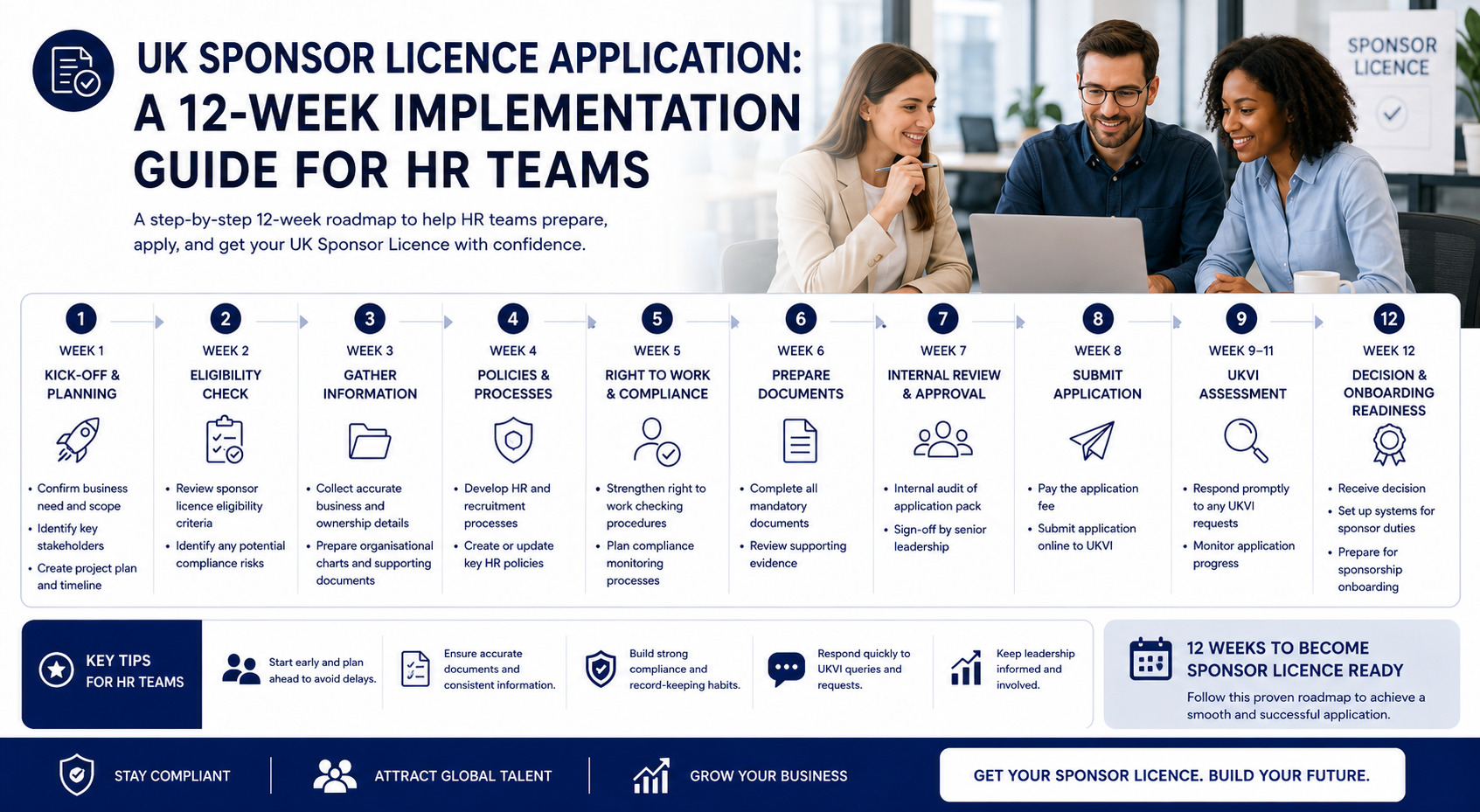
Follow this UK sponsor licence application guide to plan, prepare and submit with confidence. Explore a practical 12-week roadmap for HR teams.
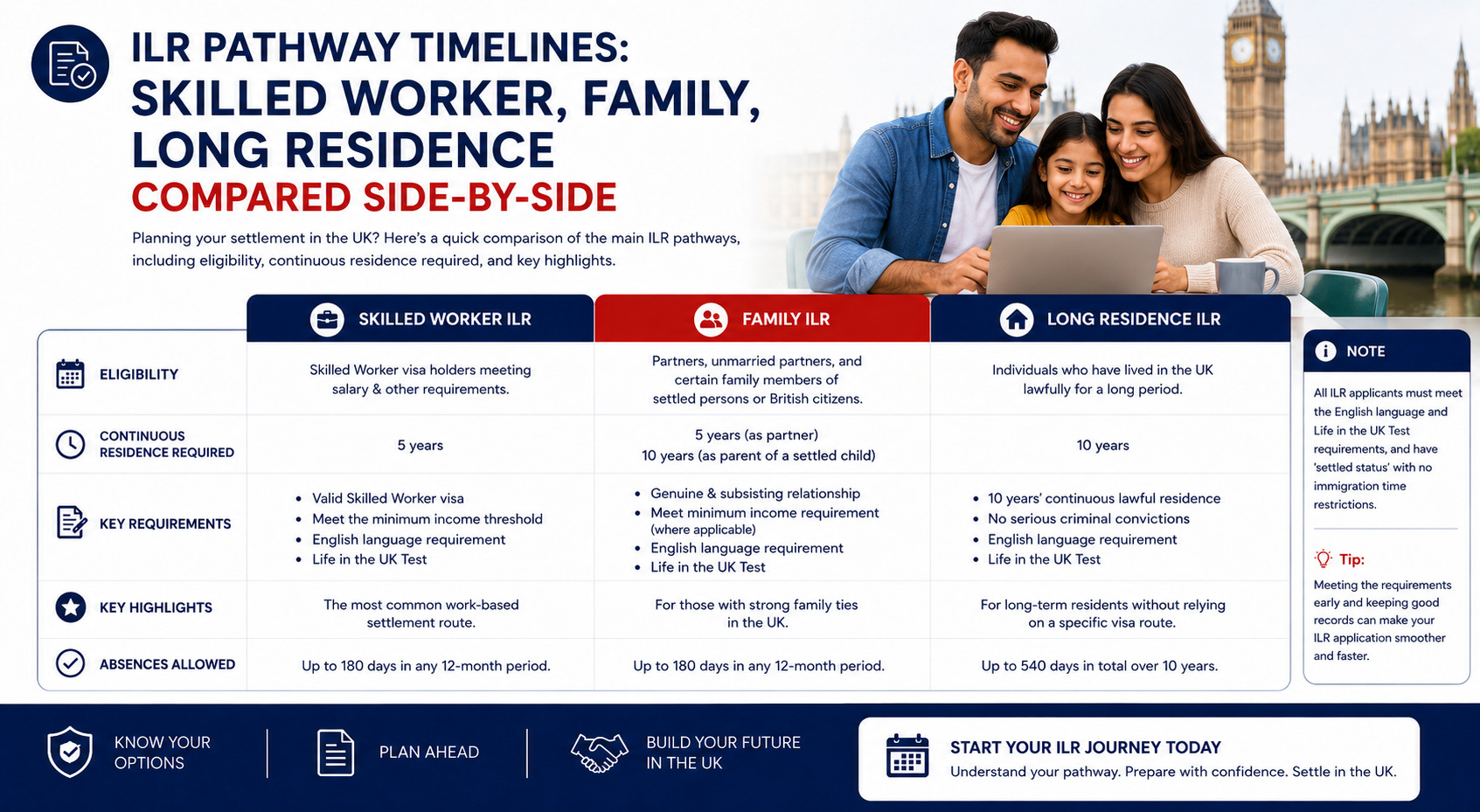
Explore ILR pathway timelines UK employers and migrants should understand across Skilled Worker, Family, and Long Residence routes. Learn more.
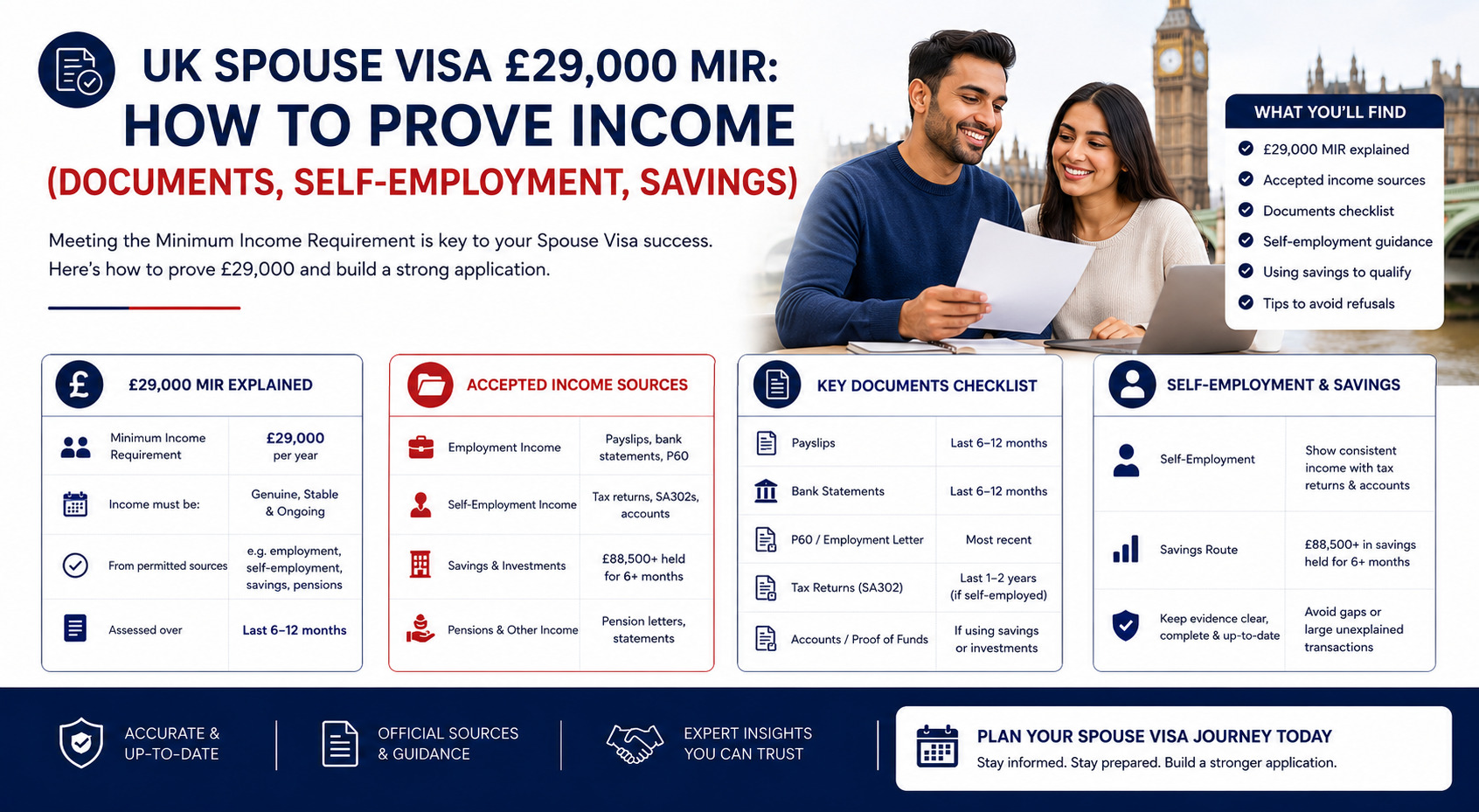
Learn which UK spouse visa £29000 MIR documents you need to prove income through employment, self-employment or savings. Explore key evidence requirements.

Discover how the Shortage Occupation List 2026 impacts reduced salary routes, sponsorship eligibility, and hiring plans for UK employers.
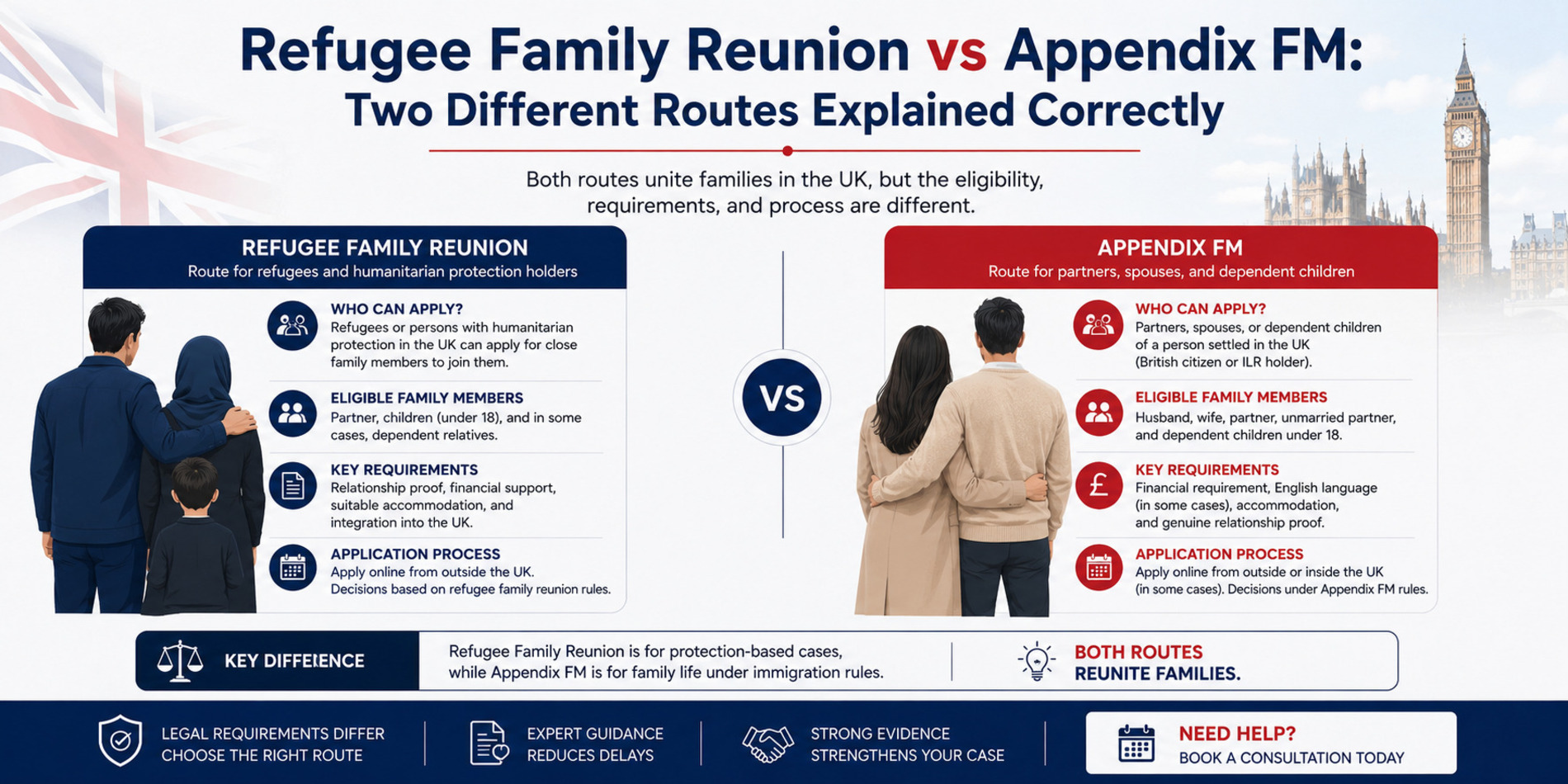
Confused about refugee family reunion UK and Appendix FM? Learn the key differences, eligibility rules, and the right route for your family. Explore now.

The UK High Potential Individual (HPI) visa lets graduates of the world’s top-ranked universities work, look for work, or run a business in the United Kingdom for two years (three years for PhD holders) without needing a job offer or a sponsor.

A UK Dependent Visa allows the spouse, civil partner, unmarried partner, or child under 18 of a main visa holder to live in the United Kingdom for as long as the main visa is valid.
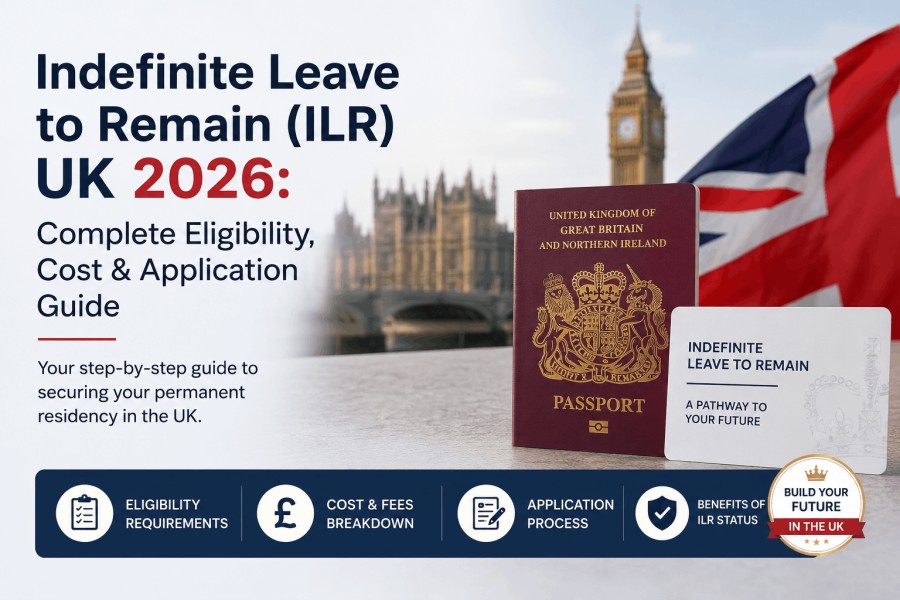
Indefinite Leave to Remain (ILR) is the UK immigration status that lets you live, work and study in the United Kingdom without any time limit. Once granted, you can stay forever, switch jobs freely, claim public funds, and after 12 months you become eligible to apply for British citizenship.

Understand UK Student Visa Requirement, updates, eligibility, costs, and application steps for 2026. Explore your UK student visa application process.

UK Family Reunion Visa explained clearly—documents, process, and approval tips. Avoid common delays and apply with confidence. Learn more.

GMS Immigration is a trusted UK-based visa consultancy offering expert guidance for visitor, work, family, and settlement visas.With over 10 years of experience and a high success rate, they provide personalised, transparent support to help clients achieve their UK immigration goals.