

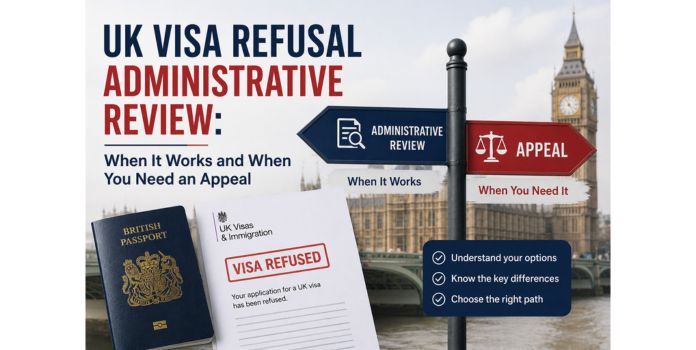
Did you know that up to 50% of contested UK immigration decisions are successfully overturned? While receiving a visa refusal is distressing, it rarely marks the end of your immigration journey. The UK legal framework provides two distinct challenge routes to remedy caseworker mistakes: a UK visa administrative review and a statutory appeal.
The correct path depends entirely on your specific visa category, the refusal reasons, and the challenge rights specified in your decision letter. Points-based applications under Appendix Skilled Worker or those meeting the student visa requirements under Appendix Student are typically limited to a UK visa administrative review to resolve clear caseworker errors. Conversely, family-based applications under Appendix FM (frequently supported by expert spouse visa services) or humanitarian pathways under Appendix Family Reunion unlock statutory UK visa appeal options to protect family life and human rights.
A UK visa administrative review is an internal Home Office process where a separate caseworking team reassesses an eligible decision to identify specific caseworking errors. This process focuses solely on correcting administrative errors and excludes new evidence.
This review is primarily available for points-based work and study routes where no statutory right of appeal exists. Common eligible categories include:
These contrast with routes like Appendix FM or Appendix Family Reunion, which trigger wider UK visa appeal options.
Read out our UK Family Reunion Visa guide to get more details.
Your Home Office decision letter explicitly states your challenge rights, deadlines, and the specific rules you allegedly failed to meet. Reading this notice meticulously is critical before deciding on an administrative review vs appeal. For professional guidance, you can consult GMS Immigration to identify errors and protect your lawful status before the strict 14-day or 28-day deadline expires.
Under Appendix Administrative Review, a caseworking error occurs when the Home Office misapplies the rules, fails to consider submitted evidence, or relies on inaccurate factual assumptions. This includes point miscalculations, procedural oversights, and incorrect assessments of immigration history.
The paper-based framework of a UK visa administrative review strictly prohibits the introduction of new evidence. The reviewing officer focuses entirely on your original application bundle. If you omitted mandatory documents, you must adopt a different strategy, as a review will simply maintain the refusal.
Succeeding at review requires proving a clear, objective caseworker error. Successful scenarios include:
Your refusal notice must explicitly grant you the right to a UK visa administrative review. This pathway applies to both in-country and out-of-country applicants under routes such as Appendix Student or Appendix Skilled Worker.
Your request must identify the exact caseworking error, direct the reviewer to the original evidence, and show how you meet the rules. For sponsorship mistakes, GMS Immigration’s certified advisers can assist in detailing complex policy arguments.
You must apply within 14 calendar days for in-country refusals (7 days if detained) or 28 calendar days if applying from outside the UK.
A different caseworking team assesses the application. The Home Office may overturn, maintain, or withdraw the decision for reconsideration. Due to queues, reviews can take 12 months or more, with updates sent if unresolved after 6 months.
Applying for a UK visa administrative review requires a statutory fee of £80, which remains unchanged following the April 2026 Home Office fee revisions. This fee is fully refundable under only two strict conditions: if your application is rejected as invalid or if the review succeeds and the refusal is withdrawn due to an identified caseworker error. However, if you choose to manually withdraw your request, or if the review is automatically cancelled because you submitted a fresh application, the £80 fee is forfeited.
The timeline to request a visa refusal review UK is exceptionally strict, and late applications are typically rejected automatically :
Due to extensive Home Office backlogs, receiving a final decision on your review can currently take 12 months or more. If your review remains outstanding after 6 months, the Home Office is required to contact you or your representative with an operational update.
For in-country applicants, your lawful status and right to work are protected by Section 3C leave while the review is pending. However, these long waiting times represent a critical strategic factor when weighing administrative review vs appeal pathways or when deciding whether to bypass the queue by submitting a fresh visa application.
Choosing between administrative review vs appeal requires understanding their distinct legal frameworks. An administrative review is a paper-based internal reassessment by a separate Home Office caseworker, whereas an appeal is a judicial process heard by an independent First-tier Tribunal judge.
| Feature | UK Visa Administrative Review | Statutory Immigration Appeal |
| Deciding Body | Home Office caseworker | Independent Tribunal Judge |
| New Evidence | Prohibited (limited exceptions) | Fully permitted |
| Primary Routes | Appendix Skilled Worker, Appendix Student | Appendix FM, Appendix Family Reunion |
A statutory right of appeal is only available for specific decisions, primarily protection claims, EU Settlement Scheme applications, and human rights claims under Article 8 ECHR (private and family life).
Under a UK visa administrative review, the caseworker only checks the original application for factual or calculation errors. You cannot submit new evidence. Conversely, an appeal allows you to submit new documents, witness statements, and oral testimonies to clarify your circumstances.
Because family-based applications under Appendix FM and Appendix Family Reunion directly engage fundamental human rights, refusals in these categories carry automatic statutory appeal rights. To navigate these high-stakes appeals under IAA guidelines, utilizing GMS Immigration's specialist UK immigration services is highly advisable to prepare your tribunal bundle.
A UK visa administrative review is not a tool to correct applicant omissions. If your application was refused because you failed to submit mandatory evidence, requesting a review will fail. The Home Office is legally restricted to assessing only the documents originally provided.
When assessing administrative review vs appeal pathways, subjective refusals involving family separation require a tribunal's intervention. A review corrects objective caseworker errors but cannot weigh Article 8 human rights arguments. For applications under Appendix FM or Appendix Family Reunion, you must pursue statutory UK visa appeal options to allow a judge to assess the decision's proportionality.
Yes. A review will fail if you simply disagree with the outcome. You must identify a defined "caseworking error" under Appendix Administrative Review, such as a mathematical or factual mistake.
In many scenarios, submitting a fresh application is the most sensible path. Consider reapplying rather than seeking a review when:
First, let's understand the basics.
If the Home Office rejects an application that engages fundamental rights, your primary recourse is a statutory immigration appeal. Unlike a UK visa administrative review, which is an internal, paper-based assessment managed by Home Office staff, an appeal provides independent judicial oversight. Your case is heard by an independent judge at the First-tier Tribunal (Immigration and Asylum Chamber), which operates entirely separate from the government and UK Visas and Immigration (UKVI).
Statutory appeal rights do not apply to standard points-based work or study routes, where a visa refusal review UK is the standard administrative path to resolve caseworker errors. Instead, appeals are reserved for cases with profound human rights or international protection implications. You will generally have access to statutory UK visa appeal options if your refusal involves:
If your family application is rejected, utilising GMS Immigration's expertise is vital to properly structure your appeal on human rights grounds.
The operational differences in administrative review vs appeal procedures are vast. The First-tier Tribunal conducts a de novo review of your case, meaning the judge assesses the decision completely afresh. The tribunal assessment process includes:
A First-tier Tribunal appeal typically results in one of two major judicial determinations :
The Home Office decision letter is the legal foundation for your next steps. It outlines the exact paragraph of the Immigration Rules you allegedly failed to meet, details the caseworker's factual findings, and explicitly states your challenge options. Misinterpreting this letter can lead to missed deadlines, such as the strict 14-day in-country or 28-day out-of-country limits, which could strip you of your right to remain in the UK.
Read more on UK Visa Refusal.
Selecting the correct path requires a calm, structured evaluation of your original application bundle and future goals :
You should seek specialist help if your refusal involves complex allegations, sponsor licence issues, or subjective assessments. UK law dictates that immigration advice must only be provided by qualified lawyers or professionals registered with the Immigration Advice Authority (IAA). Under the IAA framework, Level 2 and Level 3 advisers are specifically authorised to draft grounds for administrative reviews and represent clients in First-tier Tribunal appeals. If you are facing a complicated refusal, you can contact us at GMS Immigration to speak with our certified, Kent-based experts who can assess your case and safeguard your status.
Your Home Office decision notice is the mandatory starting point for any challenge, as it details your exact post-refusal rights and strict statutory deadlines. Selecting the wrong route can result in lost time, wasted fees, and the potential forfeiture of your lawful status in the UK.
The three post-refusal remedies differ fundamentally:
Because of these complex statutory boundaries, seeking regulated immigration advice before your 14-day or 28-day deadline expires is crucial. Instructing professionals regulated by the IAA safeguards your future. You can take the help of our professionals for an expert assessment of your decision letter to construct a secure pathway forward.
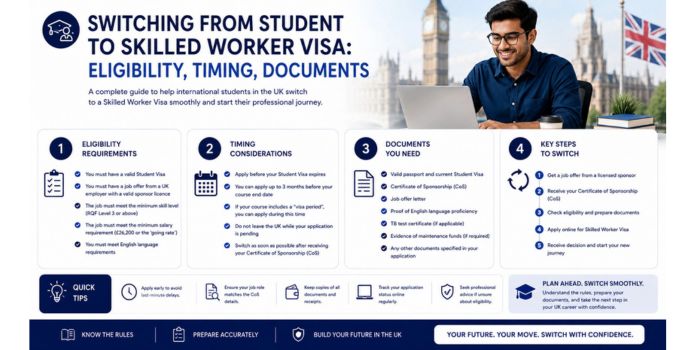
Learn how to switch student to skilled worker UK, including eligibility, timing rules, required documents, and key application steps.
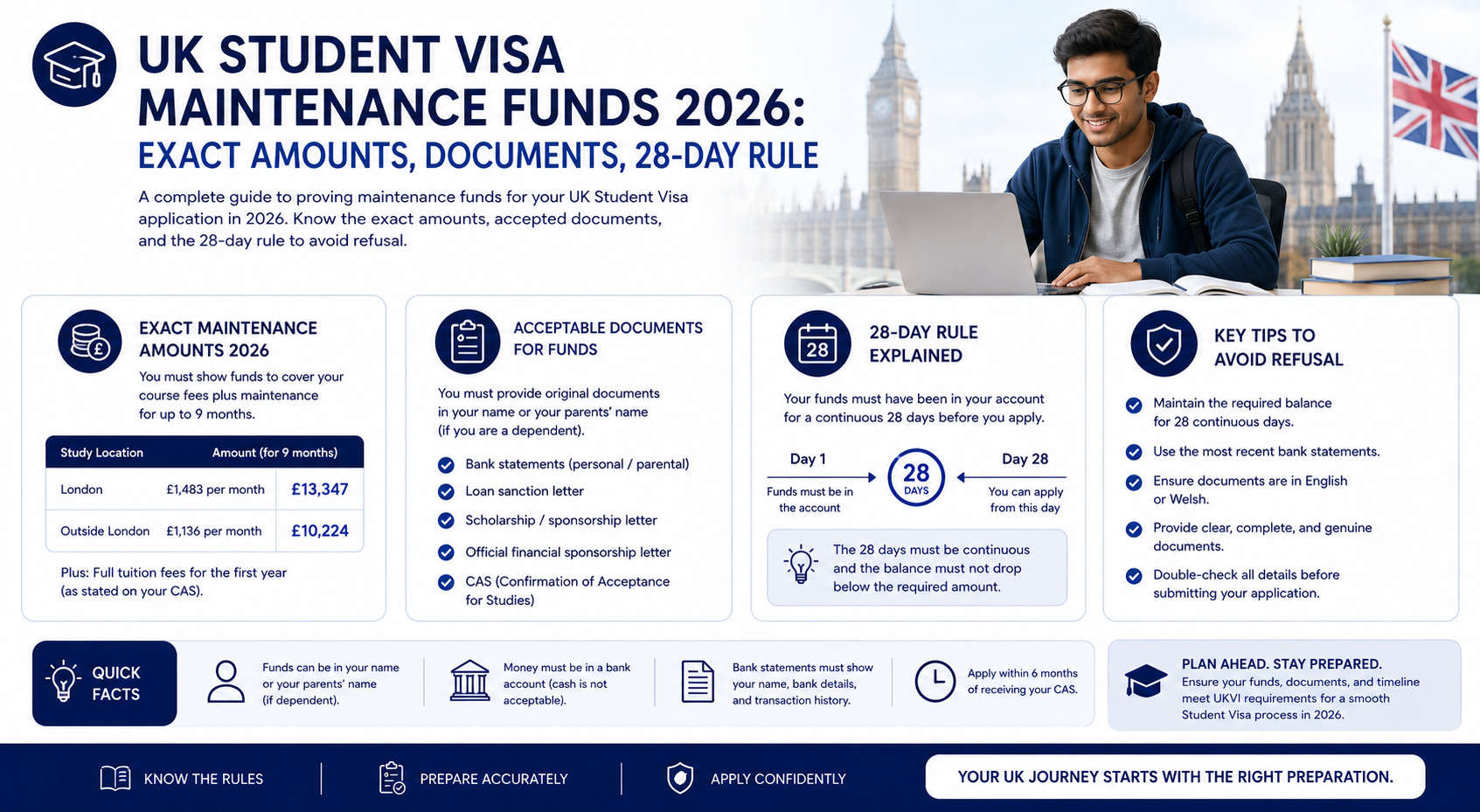
Learn the UK student visa maintenance funds requirements for 2026, including exact amounts, documents, and the 28-day rule. Explore key guidance.

Follow this UK sponsor licence application guide to plan, prepare and submit with confidence. Explore a practical 12-week roadmap for HR teams.
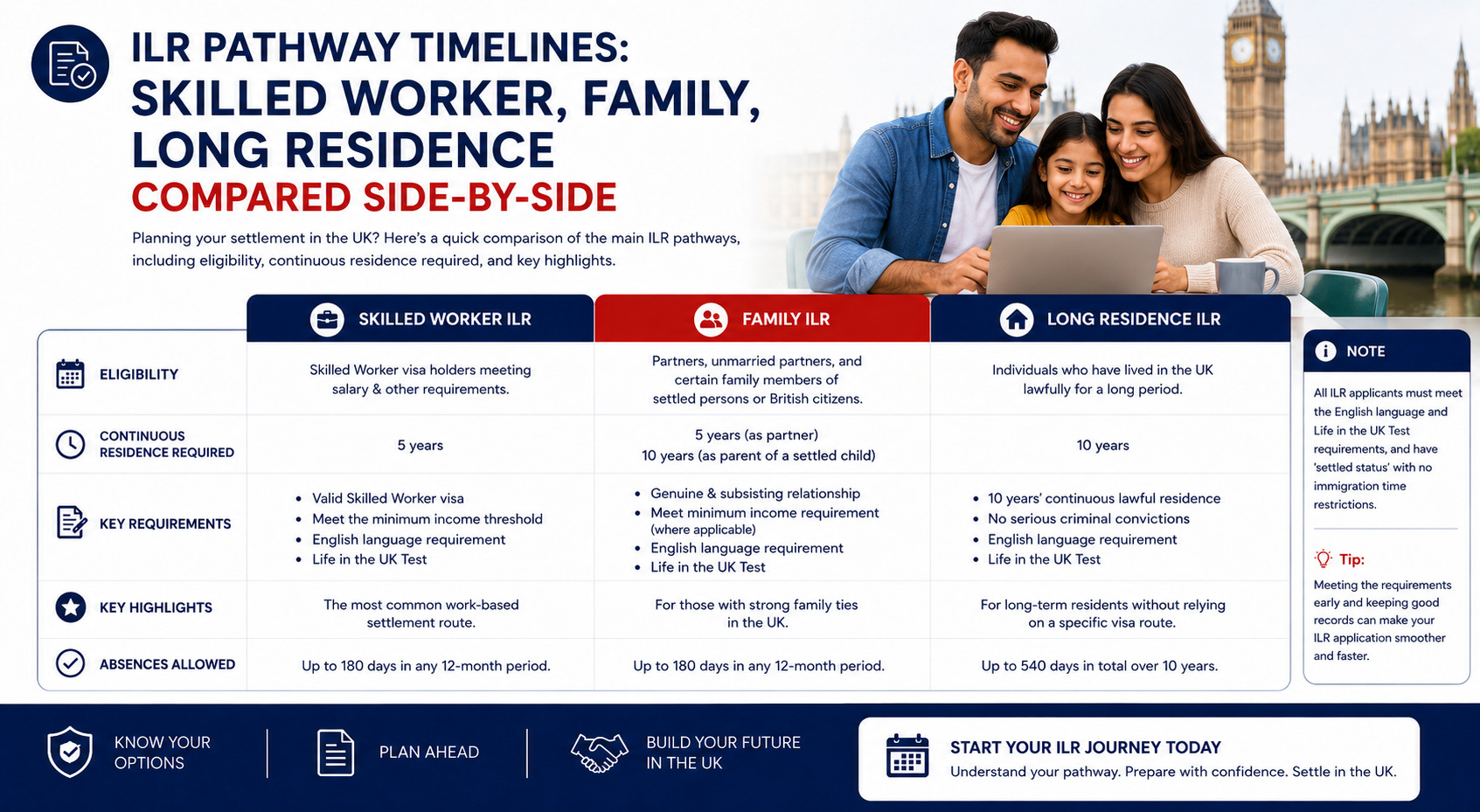
Explore ILR pathway timelines UK employers and migrants should understand across Skilled Worker, Family, and Long Residence routes. Learn more.
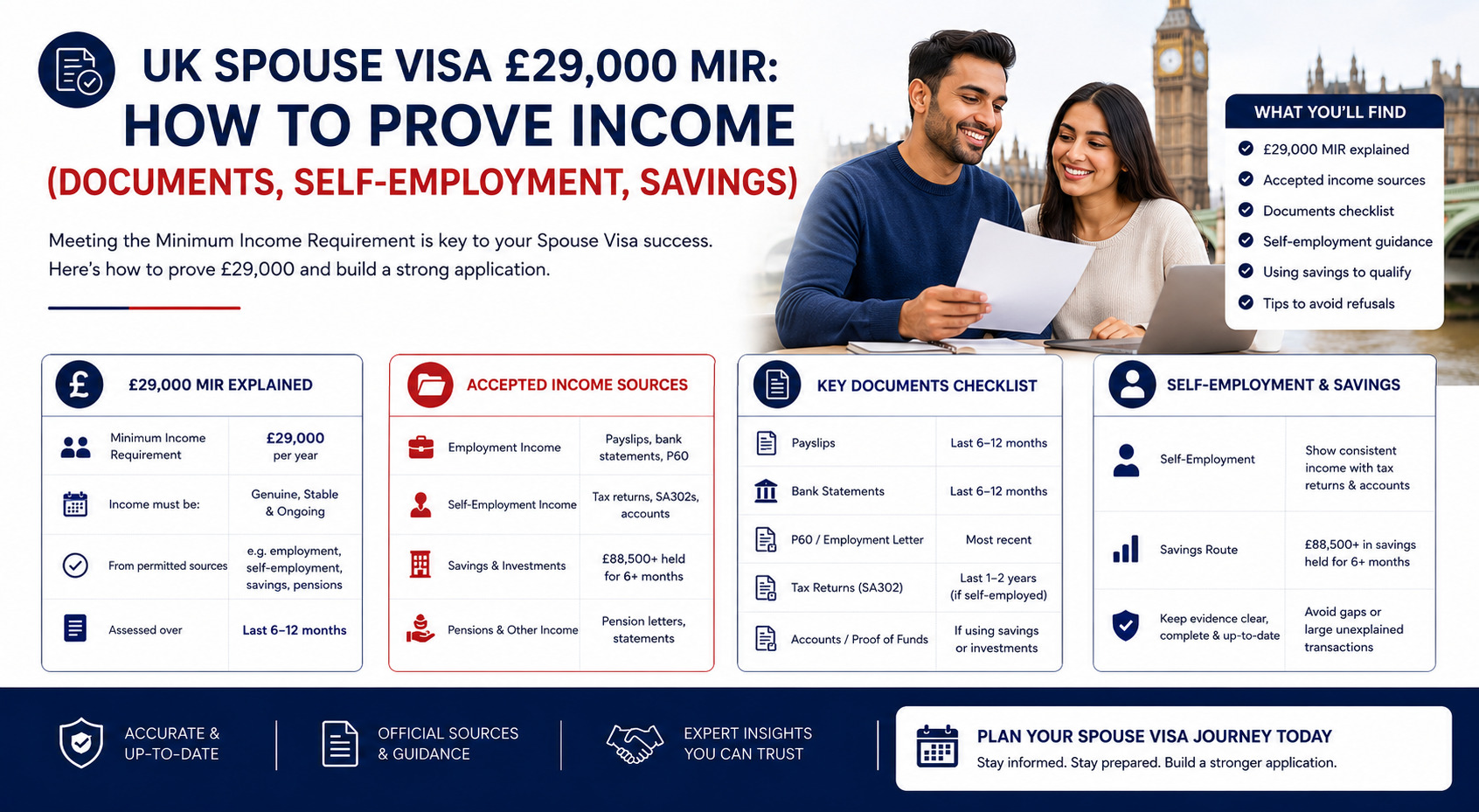
Learn which UK spouse visa £29000 MIR documents you need to prove income through employment, self-employment or savings. Explore key evidence requirements.

Discover how the Shortage Occupation List 2026 impacts reduced salary routes, sponsorship eligibility, and hiring plans for UK employers.
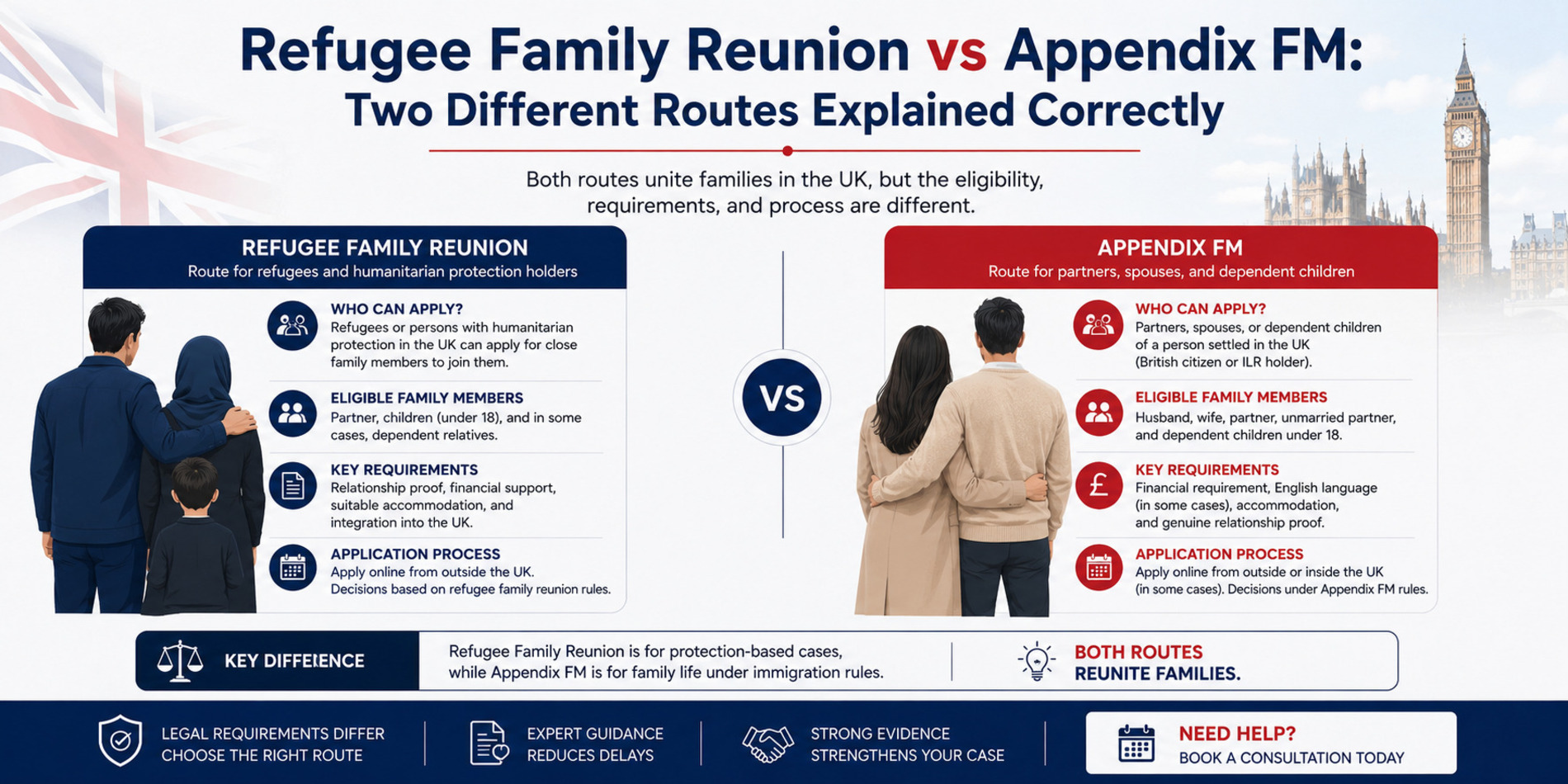
Confused about refugee family reunion UK and Appendix FM? Learn the key differences, eligibility rules, and the right route for your family. Explore now.

The UK High Potential Individual (HPI) visa lets graduates of the world’s top-ranked universities work, look for work, or run a business in the United Kingdom for two years (three years for PhD holders) without needing a job offer or a sponsor.

A UK Dependent Visa allows the spouse, civil partner, unmarried partner, or child under 18 of a main visa holder to live in the United Kingdom for as long as the main visa is valid.
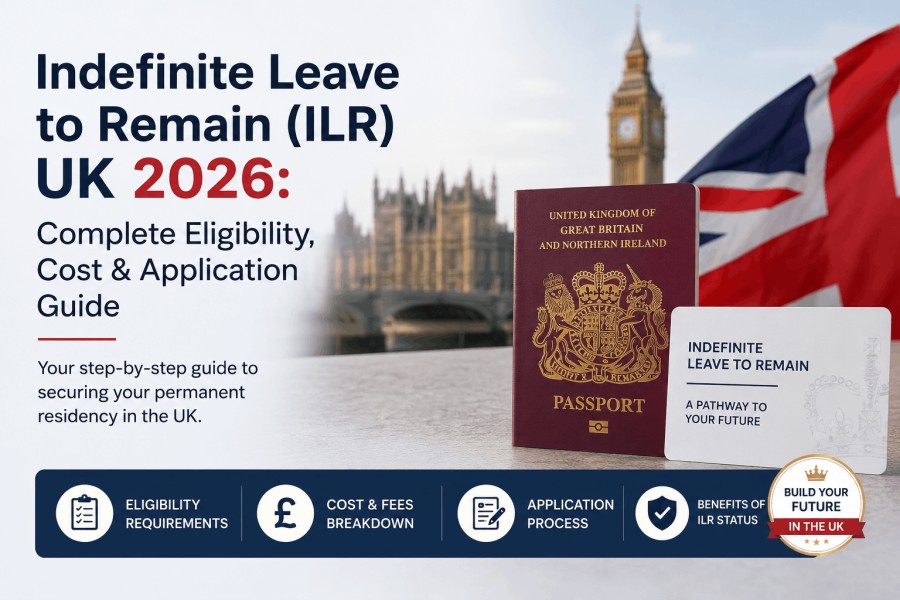
Indefinite Leave to Remain (ILR) is the UK immigration status that lets you live, work and study in the United Kingdom without any time limit. Once granted, you can stay forever, switch jobs freely, claim public funds, and after 12 months you become eligible to apply for British citizenship.
The Home Office states that administrative reviews can take longer than many applicants expect, and some cases may remain pending for several months. Processing times vary depending on the complexity of the case and operational demand.
Where a valid in-time application was made before the existing permission expired, an applicant may continue to have lawful status while the administrative review is being considered. The position depends on the individual's immigration circumstances and the type of application involved.
In most cases, you cannot request a second administrative review of the same decision. A further review may only be available where the Home Office issues a new refusal carrying fresh review rights.
If the refusal is upheld, applicants should assess the alternatives available to them, which may include a fresh application, an appeal where appeal rights exist, or other legal remedies depending on the circumstances.
An unsuccessful administrative review does not automatically create a right of appeal. Whether an appeal is available depends on the immigration route, the refusal decision, and the rights specified in the decision letter.
Yes. Judicial review is a court process that examines whether a decision was made lawfully, whereas administrative review focuses on caseworking errors, and an appeal allows an independent tribunal to consider certain immigration decisions.

GMS Immigration is a trusted UK-based visa consultancy offering expert guidance for visitor, work, family, and settlement visas.With over 10 years of experience and a high success rate, they provide personalised, transparent support to help clients achieve their UK immigration goals.